-->
#1 Trusted Cybersecurity News Platform
Followed by 5.20+ million
The Hacker News Logo
Subscribe – Get Latest News
Security Service Edge

Search results for reverse mobile phone hacking | Breaking Cybersecurity News | The Hacker News

Hacking Firmware from Mobile Phone Hacking Company Leaked Online

Hacking Firmware from Mobile Phone Hacking Company Leaked Online

Oct 26, 2016
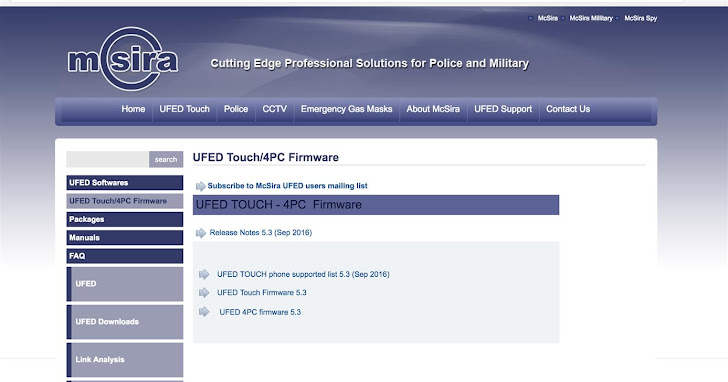
The Israeli firm Cellebrite , which provides digital forensics tools and software to help law enforcement access mobile phones in investigations, has had its firmware and software leaked online. Yes, you heard that right. Cellebrite's most sensitive in-house capabilities have been made public by one of its products' resellers, who is now distributing copies of Cellebrite's firmware and software for anyone to download. The apparent reseller is McSira Professional Solutions , which hosts software for various versions of Cellebrite's Universal Forensic Extraction Device (UFED). UFED is one of the company's key products that help investigators bypass the security mechanisms of mobile phones, especially iPhones, and extract all data and passwords from them. For the Cellebrite's hand on iOS devices, you can watch the 2015 YouTube video (below), which demonstrates one of the company's products that unlocked the iPhone device in few hours. Download  L...
New Attack Lets Hackers Decrypt VoLTE Encryption to Spy on Phone Calls

New Attack Lets Hackers Decrypt VoLTE Encryption to Spy on Phone Calls

Aug 13, 2020
A team of academic researchers—who previously made the headlines earlier this year for uncovering severe security issues in the 4G LTE and 5G networks —today presented a new attack called ' ReVoLTE ,' that could let remote attackers break the encryption used by VoLTE voice calls and spy on targeted phone calls. The attack doesn't exploit any flaw in the Voice over LTE (VoLTE) protocol; instead, it leverages weak implementation of the LTE mobile network by most telecommunication providers in practice, allowing an attacker to eavesdrop on the encrypted phone calls made by targeted victims. VoLTE or Voice over Long Term Evolution protocol is a standard high-speed wireless communication for mobile phones and data terminals, including Internet of things (IoT) devices and wearables, deploying 4G LTE radio access technology. The crux of the problem is that most mobile operators often use the same keystream for two subsequent calls within one radio connection to encrypt th...
This Cybercrime Syndicate Pre-Infected Over 8.9 Million Android Phones Worldwide

This Cybercrime Syndicate Pre-Infected Over 8.9 Million Android Phones Worldwide

May 18, 2023 Mobile Security / Cyber Crime
A cybercrime enterprise known as  Lemon Group  is leveraging millions of pre-infected Android smartphones worldwide to carry out their malicious operations, posing significant supply chain risks. "The infection turns these devices into mobile proxies, tools for stealing and selling SMS messages, social media and online messaging accounts and monetization via advertisements and click fraud," cybersecurity firm Trend Micro  said . The activity encompasses no fewer than 8.9 million compromised Android devices, particularly budget phones, with the highest concentration of the infections discovered in the U.S., Mexico, Indonesia, Thailand, Russia, South Africa, India, Angola, the Philippines, and Argentina. The findings were  presented  by researchers Fyodor Yarochkin, Zhengyu Dong, Vladimir Kropotov, and Paul Pajares at the Black Hat Asia conference held in Singapore last week. Describing it as a  continuously evolving problem , the cybersecurity firm said...
cyber security

GitLab Security Best Practices

websiteWizDevSecOps / Compliance
Learn how to reduce real-world GitLab risk by implementing essential hardening steps across the full software delivery lifecycle.
cyber security

SANS ICS Command Briefing: Preparing for What Comes Next in Industrial Security

websiteSANSICS Security / Security Training
Experts discuss access control, visibility, recovery, and governance for ICS/OT in the year ahead.
Kali Linux "NetHunter" — Turn Your Android Device into Hacking Weapons

Kali Linux "NetHunter" — Turn Your Android Device into Hacking Weapons

Sep 24, 2014
The developers of one of the most advance open source operating system for penetration testing, ' KALI Linux ' have announced yesterday the release of a new Kali project, known as NetHunter , that runs on a Google Nexus device. Kali Linux is an open source Debian-based operating system for penetration testing and forensics, which is maintained and funded by Offensive Security, a provider of world-class information security training and penetration testing services. It comes wrapped with a collection of penetration testing and network monitoring tools used for testing of software privacy and security. After making its influence in hacker and security circles, Kali Linux has now been published with Kali Nethunter, a version of the security suite for Android devices. The tool is a mobile distribution designed to compromise systems via USB when installed and run on an Android phone. Kali Linux NetHunter project provides much of the power to Nexus users, those runni...
Learn How to Code: Get 10 Best Online Training Courses for Just $49

Learn How to Code: Get 10 Best Online Training Courses for Just $49

May 12, 2017
Struggling to learn how to code? If you’re looking to 'learn how to code' and seeking a career as an expert-level programmer, you should know how to play with codes and make your own. It's no secret that mastering a coding language or two can put you at the top of the job market – thanks to the boom in technology. Today, you can elevate your programming skills straight from the Internet to become an actual coder, but getting into a heavy subject like coding involves a lot of time and money. ‘Learn to Code’ 2017 Bundle: Get 10 Courses in 1 Pack Fortunately for you, this week's THN Deal Store brings the Ultimate Learn to Code 2017 Bundle that gives you access to 10 online training courses in 1 single account at just $49, instead of $1,186. This 95% discount is valid for next few days. The Ultimate Learn to Code 2017 Bundle, comes with lifetime access, offers you professional training courses on Python, Ruby, Java, iOS, HTML, CSS, AngularJS and other programmin...
⚡ THN Weekly Recap: Google Secrets Stolen, Windows Hack, New Crypto Scams and More

⚡ THN Weekly Recap: Google Secrets Stolen, Windows Hack, New Crypto Scams and More

Feb 17, 2025 Cyber Threats / Cybersecurity
Welcome to this week’s Cybersecurity News Recap. Discover how cyber attackers are using clever tricks like fake codes and sneaky emails to gain access to sensitive data. We cover everything from device code phishing to cloud exploits, breaking down the technical details into simple, easy-to-follow insights. ⚡ Threat of the Week Russian Threat Actors Leverage Device Code Phishing to Hack Microsoft Accounts — Microsoft and Volexity have revealed that threat actors with ties to Russia are leveraging a technique known as device code phishing to gain unauthorized access to victim accounts, and use that access to get hold of sensitive data and enable persistent access to the victim environment. At least three different Russia-linked clusters have been identified abusing the technique to date. The attacks entail sending phishing emails that masquerade as Microsoft Teams meeting invitations, which, when clicked, urge the message recipients to authenticate using a threat actor-generated dev...
⚡ Weekly Recap: SharePoint 0-Day, Chrome Exploit, macOS Spyware, NVIDIA Toolkit RCE and More

⚡ Weekly Recap: SharePoint 0-Day, Chrome Exploit, macOS Spyware, NVIDIA Toolkit RCE and More

Jul 21, 2025 Enterprise Security / Zero Day
Even in well-secured environments, attackers are getting in—not with flashy exploits, but by quietly taking advantage of weak settings, outdated encryption, and trusted tools left unprotected. These attacks don’t depend on zero-days. They work by staying unnoticed—slipping through the cracks in what we monitor and what we assume is safe. What once looked suspicious now blends in, thanks to modular techniques and automation that copy normal behavior. The real concern? Control isn’t just being challenged—it’s being quietly taken. This week’s updates highlight how default settings, blurred trust boundaries, and exposed infrastructure are turning everyday systems into entry points. ⚡ Threat of the Week Critical SharePoint Zero-Day Actively Exploited (Patch Released Today) — Microsoft has released fixes to address two security flaws in SharePoint Server that have come under active exploitation in the wild to breach dozens of organizations across the world. Details of exploitation emer...
⚡ Weekly Recap: Hot CVEs, npm Worm Returns, Firefox RCE, M365 Email Raid & More

⚡ Weekly Recap: Hot CVEs, npm Worm Returns, Firefox RCE, M365 Email Raid & More

Dec 01, 2025 Hacking News / Cybersecurity
Hackers aren’t kicking down the door anymore. They just use the same tools we use every day — code packages, cloud accounts, email, chat, phones, and “trusted” partners — and turn them against us. One bad download can leak your keys. One weak vendor can expose many customers at once. One guest invite, one link on a phone, one bug in a common tool, and suddenly your mail, chats, repos, and servers are in play. Every story below is a reminder that your “safe” tools might be the real weak spot. ⚡ Threat of the Week Shai-Hulud Returns with More Aggression — The npm registry was targeted a second time by a self-replicating worm that went by the moniker "Sha1-Hulud: The Second Coming," affecting over 800 packages and 27,000 GitHub repositories. Like in the previous iteration, the main objective was to steal sensitive data like API keys, cloud credentials, and npm and GitHub authentication information, and facilitate deeper supply chain compromise in a worm-like fashion. Th...
⚡ Weekly Recap: APT Campaigns, Browser Hijacks, AI Malware, Cloud Breaches and Critical CVEs

⚡ Weekly Recap: APT Campaigns, Browser Hijacks, AI Malware, Cloud Breaches and Critical CVEs

May 26, 2025 Cybersecurity / Hacking News
Cyber threats don't show up one at a time anymore. They’re layered, planned, and often stay hidden until it’s too late. For cybersecurity teams, the key isn’t just reacting to alerts—it’s spotting early signs of trouble before they become real threats. This update is designed to deliver clear, accurate insights based on real patterns and changes we can verify. With today’s complex systems, we need focused analysis—not noise. What you’ll see here isn’t just a list of incidents, but a clear look at where control is being gained, lost, or quietly tested. ⚡ Threat of the Week Lumma Stealer, DanaBot Operations Disrupted — A coalition of private sector companies and law enforcement agencies have taken down the infrastructure associated with Lumma Stealer and DanaBot . Charges have also been unsealed against 16 individuals for their alleged involvement in the development and deployment of DanaBot. The malware is equipped to siphon data from victim computers, hijack banking session...
Iran-Linked RedKitten Cyber Campaign Targets Human Rights NGOs and Activists

Iran-Linked RedKitten Cyber Campaign Targets Human Rights NGOs and Activists

Jan 31, 2026 Cyber Espionage / Artificial Intelligence
A Farsi-speaking threat actor aligned with Iranian state interests is suspected to be behind a new campaign targeting non-governmental organizations and individuals involved in documenting recent human rights abuses. The activity , observed by HarfangLab in January 2026, has been codenamed RedKitten . It's said to coincide with the nationwide unrest in Iran that began towards the end of 2025, protesting soaring inflation, rising food prices, and currency depreciation. The ensuing crackdown has resulted in mass casualties and an internet blackout . "The malware relies on GitHub and Google Drive for configuration and modular payload retrieval, and uses Telegram for command-and-control," the French cybersecurity company said. What makes the campaign noteworthy is the threat actor's likely reliance on large language models (LLMs) to build and orchestrate the necessary tooling. The starting point of the attack is a 7-Zip archive with a Farsi filename that contains...
⚡ Weekly Recap: AI Automation Exploits, Telecom Espionage, Prompt Poaching & More

⚡ Weekly Recap: AI Automation Exploits, Telecom Espionage, Prompt Poaching & More

Jan 12, 2026 Hacking News / Cybersecurity
This week made one thing clear: small oversights can spiral fast. Tools meant to save time and reduce friction turned into easy entry points once basic safeguards were ignored. Attackers didn’t need novel tricks. They used what was already exposed and moved in without resistance. Scale amplified the damage. A single weak configuration rippled out to millions. A repeatable flaw worked again and again. Phishing crept into apps people rely on daily, while malware blended into routine system behavior. Different victims, same playbook: look normal, move quickly, spread before alarms go off. For defenders, the pressure keeps rising. Vulnerabilities are exploited almost as soon as they surface. Claims and counterclaims appear before the facts settle. Criminal groups adapt faster each cycle. The stories that follow show where things failed—and why those failures matter going forward. ⚡ Threat of the Week Maximum Severity Security Flaw Disclosed in n8n — A maximum-severity vulnerability ...
⚡ Weekly Recap: MongoDB Attacks, Wallet Breaches, Android Spyware, Insider Crime & More

⚡ Weekly Recap: MongoDB Attacks, Wallet Breaches, Android Spyware, Insider Crime & More

Dec 29, 2025 Hacking News / Cybersecurity
Last week’s cyber news in 2025 was not about one big incident. It was about many small cracks opening at the same time. Tools people trust every day behave in unexpected ways. Old flaws resurfaced. New ones were used almost immediately. A common theme ran through it all in 2025. Attackers moved faster than fixes. Access meant for work, updates, or support kept getting abused. And damage did not stop when an incident was “over” — it continued to surface months or even years later. This weekly recap brings those stories together in one place. No overload, no noise. Read on to see what shaped the threat landscape in the final stretch of 2025 and what deserves your attention now. ⚡ Threat of the Week MongoDB Vulnerability Comes Under Attack — A newly disclosed security vulnerability in MongoDB has come under active exploitation in the wild, with over 87,000 potentially susceptible instances identified across the world. The vulnerability in question is CVE-2025-14847 (CVSS score: 8.7)...
⚡ Weekly Recap: WhatsApp Worm, Critical CVEs, Oracle 0-Day, Ransomware Cartel & More

⚡ Weekly Recap: WhatsApp Worm, Critical CVEs, Oracle 0-Day, Ransomware Cartel & More

Oct 13, 2025 Cybersecurity / Hacking News
Every week, the cyber world reminds us that silence doesn’t mean safety. Attacks often begin quietly — one unpatched flaw, one overlooked credential, one backup left unencrypted. By the time alarms sound, the damage is done. This week’s edition looks at how attackers are changing the game — linking different flaws, working together across borders, and even turning trusted tools into weapons. From major software bugs to AI abuse and new phishing tricks, each story shows how fast the threat landscape is shifting and why security needs to move just as quickly. ⚡ Threat of the Week Dozens of Orgs Impacted by Exploitation of Oracle EBS Flaw — Dozens of organizations may have been impacted following the zero-day exploitation of a security flaw in Oracle's E-Business Suite (EBS) software since August 9, 2025, according to Google Threat Intelligence Group (GTIG) and Mandiant. The activity, which bears some hallmarks associated with the Cl0p ransomware crew, is assessed to have fashio...
North Korea’s ScarCruft Deploys KoSpy Malware, Spying on Android Users via Fake Utility Apps

North Korea’s ScarCruft Deploys KoSpy Malware, Spying on Android Users via Fake Utility Apps

Mar 13, 2025 Malware / Cyber Espionage
The North Korea-linked threat actor known as ScarCruft is said to have been behind a never-before-seen Android surveillance tool named KoSpy targeting Korean and English-speaking users. Lookout, which shared details of the malware campaign, said the earliest versions date back to March 2022. The most recent samples were flagged in March 2024. It's not clear how successful these efforts were. "KoSpy can collect extensive data, such as SMS messages, call logs, location, files, audio, and screenshots via dynamically loaded plugins," the company said in an analysis. The malicious artifacts masquerade as utility applications on the official Google Play Store, using the names File Manager, Phone Manager, Smart Manager, Software Update Utility, and Kakao Security to trick unsuspecting users into infecting their own devices. All the identified apps offer the promised functionality to avoid raising suspicion while stealthily deploying spyware-related components in the backg...
⚡ Weekly Recap: Chrome 0-Day, AI Hacking Tools, DDR5 Bit-Flips, npm Worm & More

⚡ Weekly Recap: Chrome 0-Day, AI Hacking Tools, DDR5 Bit-Flips, npm Worm & More

Sep 22, 2025
The security landscape now moves at a pace no patch cycle can match. Attackers aren’t waiting for quarterly updates or monthly fixes—they adapt within hours, blending fresh techniques with old, forgotten flaws to create new openings. A vulnerability closed yesterday can become the blueprint for tomorrow’s breach. This week’s recap explores the trends driving that constant churn: how threat actors reuse proven tactics in unexpected ways, how emerging technologies widen the attack surface, and what defenders can learn before the next pivot. Read on to see not just what happened, but what it means—so you can stay ahead instead of scrambling to catch up. ⚡ Threat of the Week Google Patches Actively Exploited Chrome 0-Day — Google released security updates for the Chrome web browser to address four vulnerabilities, including one that it said has been exploited in the wild. The zero-day vulnerability, CVE-2025-10585, has been described as a type confusion issue in the V8 JavaScript ...
⚡ Weekly Recap: Firewall Exploits, AI Data Theft, Android Hacks, APT Attacks, Insider Leaks & More

⚡ Weekly Recap: Firewall Exploits, AI Data Theft, Android Hacks, APT Attacks, Insider Leaks & More

Dec 22, 2025 Hacking News / Cybersecurity
Cyber threats last week showed how attackers no longer need big hacks to cause big damage. They’re going after the everyday tools we trust most — firewalls, browser add-ons, and even smart TVs — turning small cracks into serious breaches. The real danger now isn’t just one major attack, but hundreds of quiet ones using the software and devices already inside our networks. Each trusted system can become an entry point if it’s left unpatched or overlooked. Here’s a clear look at the week’s biggest risks, from exploited network flaws to new global campaigns and fast-moving vulnerabilities. ⚡ Threat of the Week Flaws in Multiple Network Security Products Come Under Attack — Over the past week, Fortinet , SonicWall , Cisco , and WatchGuard said vulnerabilities in their products have been exploited by threat actors in real-world attacks. Cisco said attacks exploiting CVE-2025-20393, a critical flaw in AsyncOS, have been abused by a China-nexus advanced persistent threat (APT) actor cod...
⚡ Weekly Recap: Cisco 0-Day, Record DDoS, LockBit 5.0, BMC Bugs, ShadowV2 Botnet & More

⚡ Weekly Recap: Cisco 0-Day, Record DDoS, LockBit 5.0, BMC Bugs, ShadowV2 Botnet & More

Sep 29, 2025 Cybersecurity / Hacking News
Cybersecurity never stops—and neither do hackers. While you wrapped up last week, new attacks were already underway. From hidden software bugs to massive DDoS attacks and new ransomware tricks, this week’s roundup gives you the biggest security moves to know. Whether you’re protecting key systems or locking down cloud apps, these are the updates you need before making your next security decision. Take a quick look to start your week informed and one step ahead. ⚡ Threat of the Week Cisco 0-Day Flaws Under Attack — Cybersecurity agencies warned that threat actors have exploited two security flaws affecting Cisco firewalls as part of zero-day attacks to deliver previously undocumented malware families like RayInitiator and LINE VIPER. The RayInitiator and LINE VIPER malware represent a significant evolution on that used in the previous campaign, both in sophistication and its ability to evade detection. The activity involves the exploitation of CVE-2025-20362 (CVSS score: 6.5) a...
Expert Insights Articles Videos
Cybersecurity Resources