-->
#1 Trusted Cybersecurity News Platform
Followed by 5.20+ million
The Hacker News Logo
Subscribe – Get Latest News
Security Service Edge

Search results for Show Hidden Devices | Breaking Cybersecurity News | The Hacker News

Researchers Discover New PlugX Malware Variant Spreading via Removable USB Devices

Researchers Discover New PlugX Malware Variant Spreading via Removable USB Devices

Jan 27, 2023 Endpoint Security / Malware
Cybersecurity researchers have uncovered a PlugX sample that employs sneaky methods to infect attached removable USB media devices in order to propagate the malware to additional systems. "This PlugX variant is wormable and infects USB devices in such a way that it conceals itself from the Windows operating file system," Palo Alto Networks Unit 42 researchers Mike Harbison and Jen Miller-Osborn  said . "A user would not know their USB device is infected or possibly used to exfiltrate data out of their networks." The cybersecurity company said it uncovered the artifact during an incident response effort following a Black Basta ransomware attack against an unnamed victim. Among other tools discovered in the compromised environment include the  Gootkit  malware loader and the  Brute Ratel C4  red team framework. The use of Brute Ratel by the Black Basta group was previously  highlighted  by Trend Micro in October 2022, with the software delivered as a...
CISA and FDA Warn of Critical Backdoor in Contec CMS8000 Patient Monitors

CISA and FDA Warn of Critical Backdoor in Contec CMS8000 Patient Monitors

Jan 31, 2025 Vulnerability / Healthcare
The U.S. Cybersecurity and Infrastructure Security Agency (CISA) and the Food and Drug Administration (FDA) have issued alerts about the presence of hidden functionality in Contec CMS8000 patient monitors and Epsimed MN-120 patient monitors. The vulnerability , tracked as CVE-2025-0626 , carries a CVSS v4 score of 7.7 on a scale of 10.0. The flaw, alongside two other issues, was reported to CISA by an anonymous external researcher. "The affected product sends out remote access requests to a hard-coded IP address, bypassing existing device network settings to do so," CISA said in an advisory. "This could serve as a backdoor and lead to a malicious actor being able to upload and overwrite files on the device." "The reverse backdoor provides automated connectivity to a hard-coded IP address from the Contec CMS8000 devices, allowing the device to download and execute unverified remote files. Publicly available records show that the IP address is not associa...
Mysterious malware that re-installs itself infected over 45,000 Android Phones

Mysterious malware that re-installs itself infected over 45,000 Android Phones

Oct 29, 2019
Over the past few months, hundreds of Android users have been complaining online of a new piece of mysterious malware that hides on the infected devices and can reportedly reinstall itself even after users delete it, or factory reset their devices. Dubbed Xhelper , the malware has already infected more than 45,000 Android devices in just the last six months and is continuing to spread by infecting at least 2,400 devices on an average each month, according to the latest report published today by Symantec. Here below, I have collected excerpts from some comments that affected users shared on the online forums while asking for how to remove the Xhelper Android malware: "xhelper regularly reinstalls itself, almost every day!" "the 'install apps from unknown sources' setting turns itself on." "I rebooted my phone and also wiped my phone yet the app xhelper came back." "Xhelper came pre-installed on the phone from China." ...
cyber security

GitLab Security Best Practices

websiteWizDevSecOps / Compliance
Learn how to reduce real-world GitLab risk by implementing essential hardening steps across the full software delivery lifecycle.
cyber security

SANS ICS Command Briefing: Preparing for What Comes Next in Industrial Security

websiteSANSICS Security / Security Training
Experts discuss access control, visibility, recovery, and governance for ICS/OT in the year ahead.
More Firmware Backdoor Found In Cheap Android Phones

More Firmware Backdoor Found In Cheap Android Phones

Dec 13, 2016
Here's some bad news for Android users again. Certain low-cost Android smartphones and tablets are shipped with malicious firmware, which covertly gathers data about the infected devices, displays advertisements on top of running applications and downloads unwanted APK files on the victim's devices. Security researchers from Russian antivirus vendor Dr.Web have discovered two types of downloader Trojans that have been incorporated in the firmware of a large number of popular Android devices operating on the MediaTek platform, which are mostly marketed in Russia. The Trojans, detected as Android.DownLoader.473.origin and Android.Sprovider.7 , are capable of collecting data about the infected devices, contacting their command-and-control servers, automatically updating themselves, covertly downloading and installing other apps based on the instructions it receives from their server, and running each time the device is restarted or turned on. The list of Android devic...
⚡ Weekly Recap: Windows 0-Day, VPN Exploits, Weaponized AI, Hijacked Antivirus and More

⚡ Weekly Recap: Windows 0-Day, VPN Exploits, Weaponized AI, Hijacked Antivirus and More

Apr 14, 2025 Threat Intelligence / Cybersecurity
Attackers aren’t waiting for patches anymore — they are breaking in before defenses are ready. Trusted security tools are being hijacked to deliver malware. Even after a breach is detected and patched, some attackers stay hidden. This week’s events show a hard truth: it’s not enough to react after an attack. You have to assume that any system you trust today could fail tomorrow. In a world where AI tools can be used against you and ransomware hits faster than ever, real protection means planning for things to go wrong — and still staying in control. Check out this week’s update to find important threat news, helpful webinars, useful tools, and tips you can start using right away. ⚡ Threat of the Week Windows 0-Day Exploited for Ransomware Attacks — A security affecting the Windows Common Log File System (CLFS) was exploited as a zero-day in ransomware attacks aimed at a small number of targets, Microsoft revealed. The flaw, CVE-2025-29824, is a privilege escalation vulnerabilit...
Local Police Listening Your Cell-Phone Without a Warrant

Local Police Listening Your Cell-Phone Without a Warrant

Apr 10, 2015
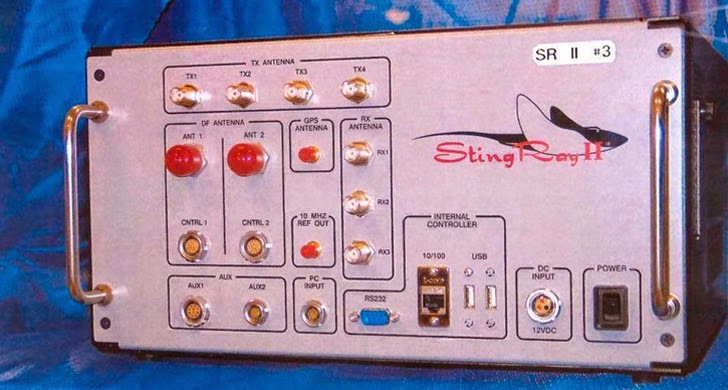
By now, everyone knows that the major federal agencies and big organisations like FBI, NSA and CIA are spying on you under their massive global surveillance programmes. But here's the Kicker: Your local police might be spying on your activities, too. According to the recent details published by the New York Civil Liberties Union (NYCLU), the police department of Erie County, New York, has used the controversial " Stingray " spying tool nearly 46 times since 2010 without any warrant. Also, the police department of Baltimore used the latest version of the Stingray surveillance device, called Hailstorm , more than 4,000 times in recent years, reports the Baltimore Sun. Late last year, we reported how US Marshals Service gathered data from millions of mobile phones by using a little device, nicknamed " Dirtbox ," in order to track criminals while recording innocent citizens’ information. Dirtbox was used in spy airplanes to mimic mobile phone ...
ThreatsDay Bulletin: $176M Crypto Fine, Hacking Formula 1, Chromium Vulns, AI Hijack & More

ThreatsDay Bulletin: $176M Crypto Fine, Hacking Formula 1, Chromium Vulns, AI Hijack & More

Oct 23, 2025 Cybersecurity / Hacking News
Criminals don’t need to be clever all the time; they just follow the easiest path in: trick users, exploit stale components, or abuse trusted systems like OAuth and package registries. If your stack or habits make any of those easy, you’re already a target. This week’s ThreatsDay highlights show exactly how those weak points are being exploited — from overlooked misconfigurations to sophisticated new attack chains that turn ordinary tools into powerful entry points. Lumma Stealer Stumbles After Doxxing Drama Decline in Lumma Stealer Activity After Doxxing Campaign The activity of the Lumma Stealer (aka Water Kurita) information stealer has witnessed a "sudden drop" since last months after the identities of five alleged core group members were exposed as part of what's said to be an aggressive underground exposure campaign dubbed Lumma Rats since late August 2025. The targeted individuals are affiliated with the malware's development and administ...
New Android Banking Trojan “Klopatra” Uses Hidden VNC to Control Infected Smartphones

New Android Banking Trojan “Klopatra” Uses Hidden VNC to Control Infected Smartphones

Oct 01, 2025 Malware / Mobile Security
A previously undocumented Android banking trojan called Klopatra has compromised over 3,000 devices, with a majority of the infections reported in Spain and Italy. Italian fraud prevention firm Cleafy, which discovered the sophisticated malware and remote access trojan (RAT) in late August 2025, said it leverages Hidden Virtual Network Computing (VNC) for remote control of infected devices and dynamic overlays for facilitating credential theft, ultimately enabling fraudulent transactions. "Klopatra represents a significant evolution in mobile malware sophistication," security researchers Federico Valentini, Alessandro Strino, Simone Mattia, and Michele Roviello said . "It combines extensive use of native libraries with the integration of Virbox, a commercial-grade code protection suite, making it exceptionally difficult to detect and analyze." Evidence gathered from the malware's command-and-control (C2) infrastructure and linguistic clues in the associated...
⚡ Weekly Recap: Airline Hacks, Citrix 0-Day, Outlook Malware, Banking Trojans and more

⚡ Weekly Recap: Airline Hacks, Citrix 0-Day, Outlook Malware, Banking Trojans and more

Jun 30, 2025 Cybersecurity / Hacking News
Ever wonder what happens when attackers don’t break the rules—they just follow them better than we do? When systems work exactly as they’re built to, but that “by design” behavior quietly opens the door to risk? This week brings stories that make you stop and rethink what’s truly under control. It’s not always about a broken firewall or missed patch—it’s about the small choices, default settings, and shortcuts that feel harmless until they’re not. The real surprise? Sometimes the threat doesn’t come from outside—it’s baked right into how things are set up. Dive in to see what’s quietly shaping today’s security challenges. ⚡ Threat of the Week FBI Warns of Scattered Spider's on Airlines — The U.S. Federal Bureau of Investigation (FBI) has warned of a new set of attacks mounted by the notorious cybercrime group Scattered Spider targeting the airline sector using sophisticated social engineering techniques to obtain initial access. Cybersecurity vendors Palo Alto Networks Unit 4...
Google Removes 85 Adware Apps That Infect 9 Million Android Users

Google Removes 85 Adware Apps That Infect 9 Million Android Users

Jan 09, 2019
Google has removed 85 apps from its Play Store after finding out that they were pushing aggressive, full-screen adware to Android users. With the rise in the mobile market, Adware has become one of the most prevalent mobile threats in the world. Adware has traditionally been used to aggressively push ads like banners or pop-ups on mobile screens to make money for its makers. The now-removed 85 apps in question disguised as games, streaming TV, and remote control simulator apps in the Google Play store and had collectively been installed by nine million users all over the world. Researchers from cyber security company Trend Micro spotted these apps which has the ability to bombard user devices with full-screen advertisements at regular intervals or when users unlock their device by monitoring their screen unlocking functionality. The apps can display ads even when you are not browsing the internet, hide themselves and run in the background on infected devices. The most popul...
⚡ Weekly Recap: F5 Breached, Linux Rootkits, Pixnapping Attack, EtherHiding & More

⚡ Weekly Recap: F5 Breached, Linux Rootkits, Pixnapping Attack, EtherHiding & More

Oct 20, 2025 Cybersecurity / Hacking News
It’s easy to think your defenses are solid — until you realize attackers have been inside them the whole time. The latest incidents show that long-term, silent breaches are becoming the norm. The best defense now isn’t just patching fast, but watching smarter and staying alert for what you don’t expect. Here’s a quick look at this week’s top threats, new tactics, and security stories shaping the landscape. ⚡ Threat of the Week F5 Exposed to Nation-State Breach — F5 disclosed that unidentified threat actors broke into its systems and stole files containing some of BIG-IP's source code and information related to undisclosed vulnerabilities in the product. The company said it learned of the incident on August 9, 2025, although it's believed that the attackers were in its network for at least 12 months. The attackers are said to have used a malware family called BRICKSTORM, which is attributed to a China-nexus espionage group dubbed UNC5221. GreyNoise said it observed elevat...
⚡ THN Weekly Recap: Top Cybersecurity Threats, Tools and Tips [3 February]

⚡ THN Weekly Recap: Top Cybersecurity Threats, Tools and Tips [3 February]

Feb 03, 2025 Cybersecurity / Recap
This week, our news radar shows that every new tech idea comes with its own challenges. A hot AI tool is under close watch, law enforcement is shutting down online spots that help cybercriminals, and teams are busy fixing software bugs that could let attackers in. From better locks on our devices to stopping sneaky tricks online, simple steps are making a big difference.  Let’s take a closer look at how these efforts are shaping a safer digital world. ⚡ Threat of the Week DeepSeek's Popularity Invites Scrutiny — The overnight popularity of DeepSeek, an artificial intelligence (AI) platform originating from China, has led to extensive scrutiny of its models, with several analyses finding ways to jailbreak its system and produce malicious or prohibited content. While jailbreaks and prompt injections are a persistent concern in mainstream AI products, the findings also show that the model lacks enough protections to prevent potential abuse by malicious actors . The AI chatbot ha...
⚡ Weekly Recap: Hyper-V Malware, Malicious AI Bots, RDP Exploits, WhatsApp Lockdown and More

⚡ Weekly Recap: Hyper-V Malware, Malicious AI Bots, RDP Exploits, WhatsApp Lockdown and More

Nov 10, 2025 Cybersecurity / Hacking News
Cyber threats didn’t slow down last week—and attackers are getting smarter. We’re seeing malware hidden in virtual machines, side-channel leaks exposing AI chats, and spyware quietly targeting Android devices in the wild. But that’s just the surface. From sleeper logic bombs to a fresh alliance between major threat groups, this week’s roundup highlights a clear shift: cybercrime is evolving fast, and the lines between technical stealth and strategic coordination are blurring. It’s worth your time. Every story here is about real risks that your team needs to know about right now. Read the whole recap. ⚡ Threat of the Week Curly COMrades Abuses Hyper-V to Hide Malware in Linux VMs — Curly COMrades, a threat actor supporting Russia's geopolitical interests, has been observed abusing Microsoft's Hyper-V hypervisor in compromised Windows machines to create a hidden Alpine Linux-based virtual machine and deploy malicious payloads. This method allows the malware to run completel...
Expert Insights Articles Videos
Cybersecurity Resources