#1 Trusted Cybersecurity News Platform
Followed by 5.20+ million
The Hacker News Logo
Subscribe – Get Latest News
Salesforce Security Handbook

Search results for add-google-chrome-extension-to-microsoft-edge | Breaking Cybersecurity News | The Hacker News

Featured Chrome Browser Extension Caught Intercepting Millions of Users' AI Chats

Featured Chrome Browser Extension Caught Intercepting Millions of Users' AI Chats

Dec 15, 2025 AI Security / Browser Security
A Google Chrome extension with a "Featured" badge and six million users has been observed silently gathering every prompt entered by users into artificial intelligence (AI)-powered chatbots like OpenAI ChatGPT, Anthropic Claude, Microsoft Copilot, DeepSeek, Google Gemini, xAI Grok, Meta AI, and Perplexity. The extension in question is Urban VPN Proxy , which has a 4.7 rating on the Google Chrome Web Store. It's advertised as the "best secured Free VPN access to any website, and unblock content." Its developer is a Delaware-based company named Urban Cyber Security Inc . On the Microsoft Edge Add-ons marketplace, it has 1.3 million installations .  Despite claiming that it allows users to "protect your online identity, stay protected, and hide your IP," an update was pushed to users on July 9, 2025, when version 5.5.0 was released with the AI data harvesting enabled by default using hard-coded settings. Specifically, this is achieved by means of a t...
ShadyPanda Turns Popular Browser Extensions with 4.3 Million Installs Into Spyware

ShadyPanda Turns Popular Browser Extensions with 4.3 Million Installs Into Spyware

Dec 01, 2025 Browser Security / Spyware
A threat actor known as ShadyPanda has been linked to a seven-year-long browser extension campaign that has amassed over 4.3 million installations over time. Five of these extensions started off as legitimate programs before malicious changes were introduced in mid-2024, according to a report from Koi Security, attracting 300,000 installs. These extensions have since been taken down. "These extensions now run hourly remote code execution – downloading and executing arbitrary JavaScript with full browser access," security researcher Tuval Admoni said in a report shared with The Hacker News. "They monitor every website visit, exfiltrate encrypted browsing history, and collect complete browser fingerprints." To make matters worse, one of the extensions, Clean Master, was featured and verified by Google at one point. This trust-building exercise allowed the attackers to expand their user base and silently issue malicious updates years later without attracting any...
GhostPoster Malware Found in 17 Firefox Add-ons with 50,000+ Downloads

GhostPoster Malware Found in 17 Firefox Add-ons with 50,000+ Downloads

Dec 17, 2025 Ad Fraud / Browser Security
A new campaign named GhostPoster has leveraged logo files associated with 17 Mozilla Firefox browser add-ons to embed malicious JavaScript code designed to hijack affiliate links, inject tracking code, and commit click and ad fraud. The extensions have been collectively downloaded over 50,000 times, according to Koi Security, which discovered the campaign. The add-ons are no longer available. These browser programs were advertised as VPNs, screenshot utilities, ad blockers, and unofficial versions of Google Translate. The oldest add-on, Dark Mode, was published on October 25, 2024, offering the ability to enable a dark theme for all websites. The full list of the browser add-ons is below - Free VPN Screenshot Weather (weather-best-forecast) Mouse Gesture (crxMouse) Cache - Fast site loader Free MP3 Downloader Google Translate (google-translate-right-clicks) Traductor de Google Global VPN - Free Forever Dark Reader Dark Mode Translator - Google Bing Baidu DeepL Weather...
cyber security

The Breach You Didn't Expect: Your AppSec Stack

websiteJFrogAppSec / DevSecOps
In a market undergoing mergers and acquisitions, vendor instability can put you in serious risk.
cyber security

How AI and Zero Trust Work Together to Catch Attacks With No Files or Indicators

websiteTHN WebinarZero Trust / Cloud Security
Modern cyberattacks hide in trusted tools and workflows, evading traditional defenses. Zero Trust and AI-powered cloud security give you the visibility and control to stop these invisible threats early.
This Malware Installs Malicious Browser Extensions to Steal Users' Passwords and Cryptos

This Malware Installs Malicious Browser Extensions to Steal Users' Passwords and Cryptos

Nov 22, 2022
A malicious extension for Chromium-based web browsers has been observed to be distributed via a long-standing Windows information stealer called ViperSoftX . Czech-based cybersecurity company dubbed the rogue browser add-on VenomSoftX owing to its standalone features that enable it to access website visits, steal credentials and clipboard data, and even swap cryptocurrency addresses via an adversary-in-the-middle (AiTM) attack. ViperSoftX, which first  came to light  in February 2020, was characterized by  Fortinet  as a JavaScript-based remote access trojan and cryptocurrency stealer. The malware's use of a browser extension to advance its information-gathering goals was documented by Sophos threat analyst  Colin Cowie  earlier this year. "This multi-stage stealer exhibits interesting hiding capabilities, concealed as small PowerShell scripts on a single line in the middle of otherwise innocent-looking large log files, among others," Avast researcher ...
Researchers Expose New Polymorphic Attack That Clones Browser Extensions to Steal Credentials

Researchers Expose New Polymorphic Attack That Clones Browser Extensions to Steal Credentials

Mar 10, 2025 Cybersecurity / Malware
Cybersecurity researchers have demonstrated a novel technique that allows a malicious web browser extension to impersonate any installed add-on. "The polymorphic extensions create a pixel perfect replica of the target's icon, HTML popup, workflows and even temporarily disables the legitimate extension, making it extremely convincing for victims to believe that they are providing credentials to the real extension," SquareX said in a report published last week. The harvested credentials could then be abused by the threat actors to hijack online accounts and gain unauthorized access to sensitive personal and financial information. The attack affects all Chromium-based web browsers, including Google Chrome, Microsoft Edge, Brave, Opera, and others. The approach banks on the fact that users commonly pin extensions to the browser's toolbar. In a hypothetical attack scenario, threat actors could publish a polymorphic extension to the Chrome Web Store (or any extension m...
New Malware Hits 300,000 Users with Rogue Chrome and Edge Extensions

New Malware Hits 300,000 Users with Rogue Chrome and Edge Extensions

Aug 10, 2024 Browser Security / Online Fraud
An ongoing, widespread malware campaign has been observed installing rogue Google Chrome and Microsoft Edge extensions via a trojan distributed via fake websites masquerading as popular software. "The trojan malware contains different deliverables ranging from simple adware extensions that hijack searches to more sophisticated malicious scripts that deliver local extensions to steal private data and execute various commands," the ReasonLabs research team said in an analysis. "This trojan malware, existing since 2021, originates from imitations of download websites with add-ons to online games and videos." The malware and the extensions have a combined reach of at least 300,000 users of Google Chrome and Microsoft Edge, indicating that the activity has a broad impact. At the heart of the campaign is the use of malvertising to push lookalike websites promoting known software like Roblox FPS Unlocker, YouTube, VLC media player, Steam, or KeePass to trick users s...
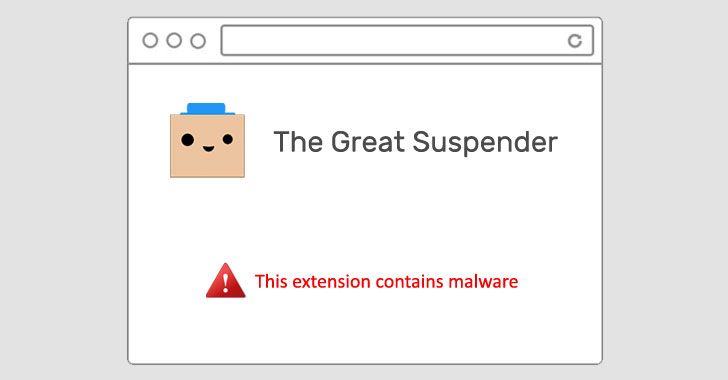
WARNING — Hugely Popular 'The Great Suspender' Chrome Extension Contains Malware

WARNING — Hugely Popular 'The Great Suspender' Chrome Extension Contains Malware

Feb 06, 2021
Google on Thursday removed The Great Suspender , a popular Chrome extension used by millions of users, from its Chrome Web Store for containing malware. It also took the unusual step of deactivating it from users' computers. "This extension contains malware,"  read  a terse notification from Google, but it has since emerged that the add-on stealthily added features that could be exploited to execute arbitrary code from a remote server, including tracking users online and committing advertising fraud. "The old maintainer appears to have sold the extension to parties unknown, who have malicious intent to exploit the users of this extension in advertising fraud, tracking, and more," Calum McConnell  said  in a GitHub post. The extension, which had more than two million installs before it was disabled, would suspend tabs that aren't in use, replacing them with a blank gray screen until they were reloaded upon returning to the tabs in question. Signs of the...
North Korean Hackers Using Malicious Browser Extension to Spy on Email Accounts

North Korean Hackers Using Malicious Browser Extension to Spy on Email Accounts

Jul 30, 2022
A threat actor operating with interests aligned with North Korea has been deploying a malicious extension on Chromium-based web browsers that's capable of stealing email content from Gmail and AOL. Cybersecurity firm Volexity attributed the malware to an activity cluster it calls  SharpTongue , which is said to share overlaps with an  adversarial collective  publicly referred to under the name  Kimsuky . SharpTongue has a history of singling out individuals working for organizations in the U.S., Europe, and South Korea who "work on topics involving North Korea, nuclear issues, weapons systems, and other matters of strategic interest to North Korea," researchers Paul Rascagneres and Thomas Lancaster  said . Kimsuky 's use of rogue extensions in attacks is not new. In 2018, the actor was seen utilizing a Chrome plugin as part of a campaign called  Stolen Pencil  to infect victims and steal browser cookies and passwords. But the latest espionag...
Experts Warn of Browser Extensions Spying On Users via Cloud9 Chrome Botnet Network

Experts Warn of Browser Extensions Spying On Users via Cloud9 Chrome Botnet Network

Nov 09, 2022
The Keksec threat actor has been linked to a previously undocumented malware strain, which has been observed in the wild masquerading as an extension for Chromium-based web browsers to enslave compromised machines into a botnet. Called  Cloud9  by security firm Zimperium, the malicious browser add-on comes with a wide range of features that enables it to siphon cookies, log keystrokes, inject arbitrary JavaScript code, mine crypto, and even enlist the host to carry out DDoS attacks. The extension "not only steals the information available during the browser session but can also install malware on a user's device and subsequently assume control of the entire device," Zimperium researcher Nipun Gupta  said  in a new report. The JavaScript botnet isn't distributed via Chrome Web Store or Microsoft Edge Add-ons, but rather through fake executables and rogue websites disguised as Adobe Flash Player updates. Once installed, the extension is designed to inject a JavaSc...
Critical RCE Vulnerability Found in Cisco WebEx Extensions, Again — Patch Now!

Critical RCE Vulnerability Found in Cisco WebEx Extensions, Again — Patch Now!

Jul 17, 2017
A highly critical vulnerability has been discovered in the Cisco Systems' WebEx browser extension for Chrome and Firefox, for the second time in this year, which could allow attackers to remotely execute malicious code on a victim's computer. Cisco WebEx is a popular communication tool for online events, including meetings, webinars and video conferences that help users connect and collaborate with colleagues around the world. The extension has roughly 20 million active users. Discovered by Tavis Ormandy of Google Project Zero and Cris Neckar of Divergent Security, the remote code execution flaw (CVE-2017-6753) is due to a designing defect in the WebEx browser extension. To exploit the vulnerability, all an attacker need to do is trick victims into visiting a web page containing specially crafted malicious code through the browser with affected extension installed. Successful exploitation of this vulnerability could result in the attacker executing arbitrary code with th...
A Browser Extension Risk Guide After the ShadyPanda Campaign

A Browser Extension Risk Guide After the ShadyPanda Campaign

Dec 15, 2025 Browser Security / SaaS Security
In early December 2025, security researchers exposed a cybercrime campaign that had quietly hijacked popular Chrome and Edge browser extensions on a massive scale. A threat group dubbed ShadyPanda spent seven years playing the long game, publishing or acquiring harmless extensions, letting them run clean for years to build trust and gain millions of installs, then suddenly flipping them into malware via silent updates. In total, about 4.3 million users installed these once-legitimate add-ons, which suddenly went rogue with spyware and backdoor capabilities. This tactic was essentially a browser extension supply-chain attack. The ShadyPanda operators even earned featured and verified badges in the official Chrome Web Store and Microsoft Edge Add-ons site for some extensions, reinforcing user confidence. Because extension updates happen automatically in the background, the attackers were able to push out malicious code without users noticing a thing. Once activated in mid-2024, the...
⚡ Weekly Recap: F5 Breached, Linux Rootkits, Pixnapping Attack, EtherHiding & More

⚡ Weekly Recap: F5 Breached, Linux Rootkits, Pixnapping Attack, EtherHiding & More

Oct 20, 2025 Cybersecurity / Hacking News
It's easy to think your defenses are solid — until you realize attackers have been inside them the whole time. The latest incidents show that long-term, silent breaches are becoming the norm. The best defense now isn't just patching fast, but watching smarter and staying alert for what you don't expect. Here's a quick look at this week's top threats, new tactics, and security stories shaping the landscape. ⚡ Threat of the Week F5 Exposed to Nation-State Breach — F5 disclosed that unidentified threat actors broke into its systems and stole files containing some of BIG-IP's source code and information related to undisclosed vulnerabilities in the product. The company said it learned of the incident on August 9, 2025, although it's believed that the attackers were in its network for at least 12 months. The attackers are said to have used a malware family called BRICKSTORM, which is attributed to a China-nexus espionage group dubbed UNC5221. GreyNoise said it observed elevat...
Malicious Browser Extensions Infect Over 700 Users Across Latin America Since Early 2025

Malicious Browser Extensions Infect Over 700 Users Across Latin America Since Early 2025

Jun 08, 2025 Malware / Browser Security
Cybersecurity researchers have shed light on a new campaign targeting Brazilian users since the start of 2025 to infect users with a malicious extension for Chromium-based web browsers and siphon user authentication data. "Some of the phishing emails were sent from the servers of compromised companies, increasing the chances of a successful attack," Positive Technologies security researcher Klimentiy Galkin said in a report. "The attackers used a malicious extension for Google Chrome, Microsoft Edge, and Brave browsers, as well as Mesh Agent and PDQ Connect Agent." The Russian cybersecurity company, which is tracking the activity under the name Operation Phantom Enigma , said the malicious extension was downloaded 722 times from across Brazil, Colombia, the Czech Republic, Mexico, Russia, and Vietnam, among others. As many as 70 unique victim companies have been identified. Some aspects of the campaign were disclosed in early April by a researcher who goes by th...
Google to Add Passwordless Authentication Support to Android and Chrome

Google to Add Passwordless Authentication Support to Android and Chrome

May 05, 2022
Google today announced  plans  to implement support for passwordless logins in Android and the Chrome web browser to allow users to seamlessly and securely sign in across different devices and websites irrespective of the platform. "This will simplify sign-ins across devices, websites, and applications no matter the platform — without the need for a single password," Google  said . Apple and Microsoft are also expected to extend the support to iOS, macOS, and Windows operating systems as well as Safari and Edge browsers. The common Fast IDentity Online ( FIDO ) sign-in system does away with passwords entirely in favor of displaying a prompt asking a user to unlock the phone when signing into a website or an application. This is made possible by storing a cryptographically-secured FIDO credential called a passkey on the phone that's used to log in to the online account after unlocking the device. "Once you've done this, you won't need your phone again a...
⚡ Weekly Recap: Chrome 0-Day, Data Wipers, Misused Tools and Zero-Click iPhone Attacks

⚡ Weekly Recap: Chrome 0-Day, Data Wipers, Misused Tools and Zero-Click iPhone Attacks

Jun 09, 2025 Cybersecurity / Hacking News
Behind every security alert is a bigger story. Sometimes it's a system being tested. Sometimes it's trust being lost in quiet ways—through delays, odd behavior, or subtle gaps in control. This week, we're looking beyond the surface to spot what really matters. Whether it's poor design, hidden access, or silent misuse, knowing where to look can make all the difference. If you're responsible for protecting systems, data, or people—these updates aren't optional. They're essential. These stories reveal how attackers think—and where we're still leaving doors open. ⚡ Threat of the Week Google Releases Patches for Actively Exploited Chrome 0-Day — Google has released Google Chrome versions 137.0.7151.68/.69 for Windows and macOS, and version 137.0.7151.68 for Linux to address a high-severity out-of-bounds read and write vulnerability in the V8 JavaScript and WebAssembly engine that it said has been exploited in the wild. Google credited Clement Lecigne and Benoît Sevens of Google T...
ThreatsDay Bulletin: CarPlay Exploit, BYOVD Tactics, SQL C2 Attacks, iCloud Backdoor Demand & More

ThreatsDay Bulletin: CarPlay Exploit, BYOVD Tactics, SQL C2 Attacks, iCloud Backdoor Demand & More

Oct 02, 2025 Threat Intelligence / Cyber Attacks
From unpatched cars to hijacked clouds, this week's Threatsday headlines remind us of one thing — no corner of technology is safe. Attackers are scanning firewalls for critical flaws, bending vulnerable SQL servers into powerful command centers, and even finding ways to poison Chrome's settings to sneak in malicious extensions. On the defense side, AI is stepping up to block ransomware in real time, but privacy fights over data access and surveillance are heating up just as fast. It's a week that shows how wide the battlefield has become — from the apps on our phones to the cars we drive. Don't keep this knowledge to yourself: share this bulletin to protect others, and add The Hacker News to your Google News list so you never miss the updates that could make the difference. Claude Now Finds Your Bugs Anthropic Touts Safety Protections Built Into Claude Sonnet 4.6 Anthropic said it has rolled out a number of safety and security improve...
⚡ Weekly Recap: Fortinet Exploit, Chrome 0-Day, BadIIS Malware, Record DDoS, SaaS Breach & More

⚡ Weekly Recap: Fortinet Exploit, Chrome 0-Day, BadIIS Malware, Record DDoS, SaaS Breach & More

Nov 24, 2025 Cybersecurity / Hacking News
This week saw a lot of new cyber trouble. Hackers hit Fortinet and Chrome with new 0-day bugs. They also broke into supply chains and SaaS tools. Many hid inside trusted apps, browser alerts, and software updates. Big firms like Microsoft, Salesforce, and Google had to react fast — stopping DDoS attacks, blocking bad links, and fixing live flaws. Reports also showed how fast fake news, AI risks, and attacks on developers are growing. Here's what mattered most in security this week. ⚡ Threat of the Week Fortinet Warns of Another Silently Patched and Actively Exploited FortiWeb Flaw — Fortinet has warned that a new security flaw in FortiWeb has been exploited in the wild. The medium-severity vulnerability, tracked as CVE-2025-58034, carries a CVSS score of 6.7 out of a maximum of 10.0. It has been addressed in version 8.0.2. "An Improper Neutralization of Special Elements used in an OS Command ('OS Command Injection') vulnerability [CWE-78] in FortiWeb may allow an a...
⚡ THN Weekly Recap: Top Cybersecurity Threats, Tools and Tips [3 February]

⚡ THN Weekly Recap: Top Cybersecurity Threats, Tools and Tips [3 February]

Feb 03, 2025 Cybersecurity / Recap
This week, our news radar shows that every new tech idea comes with its own challenges. A hot AI tool is under close watch, law enforcement is shutting down online spots that help cybercriminals, and teams are busy fixing software bugs that could let attackers in. From better locks on our devices to stopping sneaky tricks online, simple steps are making a big difference.  Let's take a closer look at how these efforts are shaping a safer digital world. ⚡ Threat of the Week DeepSeek's Popularity Invites Scrutiny — The overnight popularity of DeepSeek, an artificial intelligence (AI) platform originating from China, has led to extensive scrutiny of its models, with several analyses finding ways to jailbreak its system and produce malicious or prohibited content. While jailbreaks and prompt injections are a persistent concern in mainstream AI products, the findings also show that the model lacks enough protections to prevent potential abuse by malicious actors . The AI chatbot ha...
Expert Insights Articles Videos
Cybersecurity Resources