-->
#1 Trusted Cybersecurity News Platform
Followed by 5.70+ million
The Hacker News Logo
Get the Latest News
cybersecurity

The Hacker News | #1 Trusted Source for Cybersecurity News — Index Page

New Mac OS Malware exploited two known Java vulnerabilities

New Mac OS Malware exploited two known Java vulnerabilities

Sep 24, 2013
A new Mac OS Malware has been discovered called OSX/Leverage . A , which appears to be yet another targeted command-and-control Trojan horse, that creates a backdoor on an affected user’s machine. The Trojan named ' Leverage ' because the Trojan horse is distributed as an application disguised as a picture of two people kissing, possibly a scene from the television show " Leverage ". The attack launched via a Java applet from a compromised website and which drops a Java archive with the backdoor to the visitor's computer and launches it without a user intercation. To perform the attack, Malware uses two recently disclosed Java vulnerabilies  known as CVE-2013-2465 and CVE-2013-2471. Once it’s installed, the Trojan connects to the C&C server on port 7777. Security vendor Intego said that Malware linked to Syrian Electronic Army (SEA) , because after installation Malware attempt to download an image associated with the Syrian Electronic...
Internet Explorer zero-day exploit used watering hole attacks to target Japanese users

Internet Explorer zero-day exploit used watering hole attacks to target Japanese users

Sep 24, 2013
Attackers exploiting a zero-day vulnerability CVE-2013-3893 in Microsoft’s Internet Explorer browser and served them on compromised popular Japanese news websites. According to FireEye , at least three major Japanese media websites were compromised in watering hole attacks, dubbed Operation DeputyDog , appears to target manufacturers, government entities and media organizations in Japan. The compromised sites recorded more than 75,000 page views before the exploits were discovered. The zero-day vulnerability in IE 8 and 9 allows the stealthy installation of software in the users’ computers which then can be remotely accessed by the hackers. The hackers typically use Trojans designed specifically for a pay-to-order attack to steal intellectual property. Researchers saw a payload executable file used against a Japanese target posing as an image file hosted on a Hong Kong server. The attack in Japan was discovered two days after Microsoft disclosed the ...
Fake Grand Theft Auto V iFruit Android app fools thousands

Fake Grand Theft Auto V iFruit Android app fools thousands

Sep 23, 2013
Android malware is continuing to cause problems for end users with huge amounts of fraud and Malware campaigns going on. A lot of fake apps are currently on Google Play Store fooling thousands of consumers. Grand Theft Auto 5 , which hit stores last Tuesday and is shaping up to be the most lucrative video game release ever. Now, Rockstar Game do plan to bring their Grand Theft Auto V iFruit app for Android devices, but before official released, it’s fake malicious versions are out in Google Play Market. Rockstar have confirmed that they haven’t released the Android version yet, only the iOS version is available right now and Android owners are warned not to download them, because some could contain malicious malware . There are at least two fake apps have surfaced on the Google Play Store that use the same icon as iFruit in an attempt to mimic the real thing. The deceptive part about these apps is that the developer publicly listed appears as “...
cyber security

Military Appreciation Month: 10% Off SANS Cybersecurity Training

websiteSANS InstituteCybersecurity Training
Get 10% off SANS training this May—online or in person. Use code MILITARY10. U.S. only.
cyber security

The Validation Gap: What Automated Pentesting Alone Cannot See

websitePicus SecurityAutomated Pentesting / Exposure Validation
This free guide maps the structural blind spots and gives you 3 diagnostic questions for any vendor conversation.
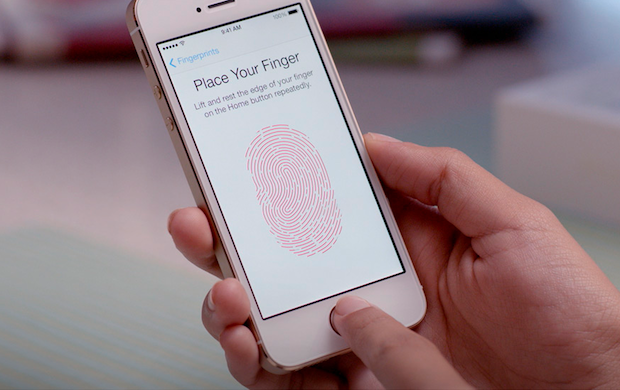
Finally, iPhone's Fingerprint Scanner 'TouchID' hacked first by German Hackers

Finally, iPhone's Fingerprint Scanner 'TouchID' hacked first by German Hackers

Sep 23, 2013
Apple has marketed TouchID both as a convenience and as a security feature. “ Your fingerprint is one of the best passwords in the world ,” says an Apple promotional video. A European hacker group has announced a simple, replicable method for spoofing Apple’s TouchID fingerprint authentication system. The Apple TouchID it the technology developed by Apple to replace passcode on its mobile and help protect users' devices, it is based on a sensor placed under the home button and it is designed to substitute the four-digit passcode to unlock the handset and authorize iTunes Store purchases. But is it really so? Hackers members of the Chaos Computer Club claim to have defeated Apple TouchID fingerprint sensor for the iPhone 5S, just after the start of its sale to the public. " Fingerprints should not be used to secure anything. You leave them everywhere, and it is far too easy to make fake fingers out of lifted prints, " a hacker named Starbug was quoted as sa...
Turning your iPhone or Android camera into Microscope

Turning your iPhone or Android camera into Microscope

Sep 22, 2013
Have you ever been wanting to take a picture of something you're looking at under your microscope but you just can't? Well, but now the Microphone Lens turns your iPhone or Android camera phone into a portable handheld microscope. By attaching a lightweight, inexpensive device to the back of a smart phone, researchers at the University of California (UCLA) can convert the phone into a sensitive fluorescence microscope. Microphone Lens allows the phone's camera to take pictures of single nanoparticles and viruses, possibly providing a portable diagnostic tool for health care workers in developing countries. In an experiment, A Nokia 808 PureView smartphone has been used to do fluorescent imaging on individual nanoparticles and viruses. By clipping on a 3D-printed attachment that included a laser bought on eBay Their work is funded by Nokia university research funding, the Army Research Office, the National Science Foundation, and other sources.
Second iOS 7 Lockscreen vulnerability lets intruders to make calls from locked iPhone

Second iOS 7 Lockscreen vulnerability lets intruders to make calls from locked iPhone

Sep 21, 2013
Just two days back Apple has yet fixed a security flaw in iOS 7 that allows anyone to bypass the lock screen to access users’ personal data and the next one has already appeared. The new vulnerability was discovered by Karam Daoud, a 27 year old from the West Bank city of Ramallah in Palestine, that allows anyone to make calls from a locked iPhone , including international calls and calls to premium numbers. In a video, Daoud showed that calls can be made to any number from a locked iPhone running iOS 7 by using a vulnerability in the device’s emergency calling function. The person needs to dial a number and then rapidly tap the call button until an empty screen with an Apple logo appears and makes the call to the particular number. The Forbes writer tested the flaw on two iPhone 5 devices on separate networks and it worked both times. This is the second malfunction found in the lock screen since iOS 7 was seeded to all iPhone owners this past Wednesday...
Integrated circuits can be compromised using Undetectable hardware Trojans

Integrated circuits can be compromised using Undetectable hardware Trojans

Sep 21, 2013
A team of researchers from the U.S. and Europe has developed a Hardware Trojan , which is an undetectable to many techniques, raising the question on need of proper hardware qualification.  They  released a paper on stealthy Dopant-Level Hardware Trojans, showing how integrated circuits used in computers, military equipment and other critical systems can be maliciously compromised during the manufacturing process. " In this paper we propose an extremely stealthy approach for implementing hardware Trojans below the gate level, and we evaluate their impact on the security of the target device. Instead of adding additional circuitry to the target design, we insert our hardware Trojans by changing the dopant polarity of existing transistors. " states the paper abstract. The Scientists devised two such backdoors they said adversaries could feasibly build into processors to surreptitiously bypass cryptographic protections provided by the computer run...
Expert Insights Articles Videos
Cybersecurity Resources