-->
#1 Trusted Cybersecurity News Platform
Followed by 5.20+ million
The Hacker News Logo
Subscribe – Get Latest News
Security Service Edge

Search results for proxy vulnerability | Breaking Cybersecurity News | The Hacker News

Critical Bug Reported in NPM Package With Millions of Downloads Weekly

Critical Bug Reported in NPM Package With Millions of Downloads Weekly

Sep 13, 2021
A widely used NPM package called ' Pac-Resolver ' for the JavaScript programming language has been remediated with a fix for a high-severity remote code execution vulnerability that could be abused to run malicious code inside Node.js applications whenever HTTP requests are sent.  The flaw, tracked as  CVE-2021-23406 , has a severity rating of 8.1 on the CVSS vulnerability scoring system and affects Pac-Resolver versions before 5.0.0. A Proxy Auto-Configuration ( PAC ) file is a JavaScript function that determines whether web browser requests should be routed directly to the destination or forwarded to a web proxy server for a given hostname. PAC files are how proxy rules are distributed in enterprise environments. "This package is used for PAC file support in  Pac-Proxy-Agent , which is used in turn in  Proxy-Agent , which then used all over the place as the standard go-to package for HTTP proxy auto-detection and configuration in Node.js," Tim Perry  said...
Critical RCE Flaw Found in OpenVPN that Escaped Two Recent Security Audits

Critical RCE Flaw Found in OpenVPN that Escaped Two Recent Security Audits

Jun 22, 2017
A security researcher has found four vulnerabilities, including a critical remote code execution bug, in OpenVPN, those were not even caught in the two big security audits of the open source VPN software this year. OpenVPN is one of the most popular and widely used open source VPN software solutions mostly used for various connectivity needs, but it is especially popular for anonymous and private access to the Internet. This year, two independent security audits of OpenVPN were carried out to look for flaws, backdoors, and other defects in the open source software – one conducted by a team led by Johns Hopkins University crypto-boffin Dr. Matthew D. Green. The audits resulted in a patch of a few vulnerabilities in the widely used open source software, giving OpenVPN a clean chit. Researcher Used Fuzzer to find Bugs in OpenVPN Researcher Guido Vranken of Netherlands exclusively used a fuzzer and recently discovered four security holes in OpenVPN that escaped both the secur...
Thousands of MikroTik Routers Hacked to Eavesdrop On Network Traffic

Thousands of MikroTik Routers Hacked to Eavesdrop On Network Traffic

Sep 04, 2018
Last month we reported about a widespread crypto-mining malware campaign that hijacked over 200,000 MikroTik routers using a previously disclosed vulnerability revealed in the CIA Vault 7 leaks . Now Chinese security researchers at Qihoo 360 Netlab have discovered that out of 370,000 potentially vulnerable MikroTik routers, more than 7,500 devices have been compromised to enable Socks4 proxy maliciously, allowing attackers to actively eavesdrop on the targeted network traffic since mid-July. The vulnerability in question is Winbox Any Directory File Read (CVE-2018-14847) in MikroTik routers that was found exploited by the CIA Vault 7 hacking tool called Chimay Red , along with another MikroTik's Webfig remote code execution vulnerability. Both Winbox and Webfig are RouterOS management components with their corresponding communication ports as TCP/8291, TCP/80, and TCP/8080. Winbox is designed for Windows users to easily configure the routers that download some DLL files ...
cyber security

Shadow AI Is Everywhere. Here’s How You Can Find and Secure It

websiteNudge SecuritySaaS Security / Shadow AI
Learn what actually works for uncovering shadow AI apps, integrations, and data exposure—and where some methods fall short.
cyber security

OpenClaw: RCE, Leaked Tokens, and 21K Exposed Instances in 2 Weeks

websiteReco AIAttack Surface / AI Agents
The viral AI agent connects to Slack, Gmail, and Drive—and most security teams have zero visibility into it.
VMware Warns of Critical File Upload Vulnerability Affecting vCenter Server

VMware Warns of Critical File Upload Vulnerability Affecting vCenter Server

Sep 22, 2021
VMware on Tuesday published a new bulletin warning of as many as 19 vulnerabilities in vCenter Server and Cloud Foundation appliances that a remote attacker could exploit to take control of an affected system. The most urgent among them is an arbitrary file upload vulnerability in the Analytics service (CVE-2021-22005) that impacts vCenter Server 6.7 and 7.0 deployments. "A malicious actor with network access to port 443 on vCenter Server may exploit this issue to execute code on vCenter Server by uploading a specially crafted file," the company  noted ,  adding  "this vulnerability can be used by anyone who can reach vCenter Server over the network to gain access, regardless of the configuration settings of vCenter Server." Although VMware has published  workarounds  for the flaw, the company cautioned that they are "meant to be a temporary solution until updates […] can be deployed." The complete list of flaws patched by the virtualization services ...
New Apache Reverse Proxy Flaw Allows Access to Internal Network

New Apache Reverse Proxy Flaw Allows Access to Internal Network

Nov 27, 2011
New Apache Reverse Proxy Flaw Allows Access to Internal Network Apache acknowledged another reverse proxy issue (CVE-2011-4317) which was discovered by Apache developer from Red Hat while creating a QualysGuard vulnerability signature for an older problem CVE-2011-3368. Depending on the reverse proxy configuration, the vulnerability could allow access to internal systems from the Internet. In order to set up Apache HTTPD to run as a reverse proxy, server administrators use specialized modules like mod_proxy and mod_rewrite. Apache developers are working on a fix of a flaw in its web server software that creates a possible mechanism to access internal systems.The zero-day vulnerability only rears its ugly head if reverse proxy rules are configured incorrectly and is far from easy to exploit, but it is nonetheless nasty. The problem isn't new and a vulnerability that allowed similar attacks was addressed back in October. However, while reviewing the patch for it, Qualys research...
Kimwolf Android Botnet Infects Over 2 Million Devices via Exposed ADB and Proxy Networks

Kimwolf Android Botnet Infects Over 2 Million Devices via Exposed ADB and Proxy Networks

Jan 05, 2026 IoT Security / Mobile Security
The botnet known as Kimwolf has infected more than 2 million Android devices by tunneling through residential proxy networks, according to findings from Synthient. "Key actors involved in the Kimwolf botnet are observed monetizing the botnet through app installs, selling residential proxy bandwidth, and selling its DDoS functionality," the company said in an analysis published last week. Kimwolf was first publicly documented by QiAnXin XLab last month, while documenting its connections to another botnet known as AISURU. Active since at least August 2025, Kimwolf is assessed to be an Android variant of AISURU. There is growing evidence to suggest that the botnet is actually behind a series of record-setting DDoS attacks late last year. The malware turns infected systems into conduits for relaying malicious traffic and orchestrating distributed denial-of-service (DDoS) attacks at scale. The vast majority of the infections are concentrated in Vietnam, Brazil, India, and ...
Critical Vulnerability in Anthropic's MCP Exposes Developer Machines to Remote Exploits

Critical Vulnerability in Anthropic's MCP Exposes Developer Machines to Remote Exploits

Jul 01, 2025 Vulnerability / AI Security
Cybersecurity researchers have discovered a critical security vulnerability in artificial intelligence (AI) company Anthropic's Model Context Protocol ( MCP ) Inspector project that could result in remote code execution (RCE) and allow an attacker to gain complete access to the hosts. The vulnerability, tracked as CVE-2025-49596 , carries a CVSS score of 9.4 out of a maximum of 10.0. "This is one of the first critical RCEs in Anthropic's MCP ecosystem, exposing a new class of browser-based attacks against AI developer tools," Oligo Security's Avi Lumelsky said in a report published last week. "With code execution on a developer's machine, attackers can steal data, install backdoors, and move laterally across networks - highlighting serious risks for AI teams, open-source projects, and enterprise adopters relying on MCP." MCP, introduced by Anthropic in November 2024, is an open protocol that standardizes the way large language model (LLM) appli...
Critical mcp-remote Vulnerability Enables Remote Code Execution, Impacting 437,000+ Downloads

Critical mcp-remote Vulnerability Enables Remote Code Execution, Impacting 437,000+ Downloads

Jul 10, 2025 Vulnerability / AI Security
Cybersecurity researchers have discovered a critical vulnerability in the open-source mcp-remote project that could result in the execution of arbitrary operating system (OS) commands. The vulnerability, tracked as CVE-2025-6514 , carries a CVSS score of 9.6 out of 10.0. "The vulnerability allows attackers to trigger arbitrary OS command execution on the machine running mcp-remote when it initiates a connection to an untrusted MCP server, posing a significant risk to users – a full system compromise," Or Peles, JFrog Vulnerability Research Team Leader, said . Mcp-remote is a tool that sprang forth following Anthropic's release of Model Context Protocol (MCP), an open-source framework that standardizes the way large language model (LLM) applications integrate and share data with external data sources and services. It acts as a local proxy, enabling MCP clients like Claude Desktop to communicate with remote MCP servers, as opposed to running them locally on the same...
Coolify Discloses 11 Critical Flaws Enabling Full Server Compromise on Self-Hosted Instances

Coolify Discloses 11 Critical Flaws Enabling Full Server Compromise on Self-Hosted Instances

Jan 08, 2026 Vulnerability / Container Security
Cybersecurity researchers have disclosed details of multiple critical-severity security flaws affecting Coolify , an open-source, self-hosting platform, that could result in authentication bypass and remote code execution. The list of vulnerabilities is as follows - CVE-2025-66209 (CVSS score: 10.0) - A command injection vulnerability in the database backup functionality allows any authenticated user with database backup permissions to execute arbitrary commands on the host server, resulting in container escape and full server compromise CVE-2025-66210 (CVSS score: 10.0) - An authenticated command injection vulnerability in the database import functionality allows attackers to execute arbitrary commands on managed servers, leading to full infrastructure compromise CVE-2025-66211 (CVSS score: 10.0) - A command injection vulnerability in the PostgreSQL init script management allows authenticated users with database permissions to execute arbitrary commands as root on the server ...
LangSmith Bug Could Expose OpenAI Keys and User Data via Malicious Agents

LangSmith Bug Could Expose OpenAI Keys and User Data via Malicious Agents

Jun 17, 2025 Vulnerability / LLM Security
Cybersecurity researchers have disclosed a now-patched security flaw in LangChain's LangSmith platform that could be exploited to capture sensitive data, including API keys and user prompts. The vulnerability, which carries a CVSS score of 8.8 out of a maximum of 10.0, has been codenamed AgentSmith by Noma Security. LangSmith is an observability and evaluation platform that allows users to develop, test, and monitor large language model (LLM) applications, including those built using LangChain. The service also offers what's called a LangChain Hub , which acts as a repository for all publicly listed prompts, agents, and models. "This newly identified vulnerability exploited unsuspecting users who adopt an agent containing a pre-configured malicious proxy server uploaded to 'Prompt Hub,'" researchers Sasi Levi and Gal Moyal said in a report shared with The Hacker News. "Once adopted, the malicious proxy discreetly intercepted all user communicatio...
Apache Patch released for Reverse proxy Bypass Vulnerability

Apache Patch released for Reverse proxy Bypass Vulnerability

Oct 08, 2011
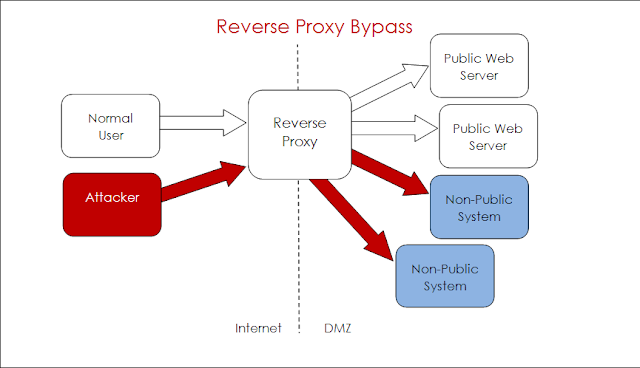
Apache Patch released for  Reverse proxy Bypass Vulnerability Security experts at Context have discovered a hole in the Apache web server that allows remote attackers to access internal servers. Security experts are warning firms running the Apache web server to keep up to date with the latest patches after the Apache Software Foundation issued a security advisory to all customers highlighting a new vulnerability. The weakness in 1.3 and all 2.x versions of the Apache HTTP Server can be exploited only under certain conditions. Reverse proxies are used to route external HTTP and HTTPS web requests to one of several internal web servers to access data and resources. Typical applications include load balancing, separating static from dynamic content, or to present a single interface to a number of different web servers at different paths. Context explained that the attack is based on an Apache web server using the mod_rewrite proxy function, and uses a common hacking...
Microsoft Patches 67 Vulnerabilities Including WEBDAV Zero-Day Exploited in the Wild

Microsoft Patches 67 Vulnerabilities Including WEBDAV Zero-Day Exploited in the Wild

Jun 11, 2025 Endpoint Security / Vulnerability
Microsoft has released patches to fix 67 security flaws , including one zero-day bug in Web Distributed Authoring and Versioning (WebDAV) that it said has come under active exploitation in the wild. Of the 67 vulnerabilities, 11 are rated Critical and 56 are rated Important in severity. This includes 26 remote code execution flaws, 17 information disclosure flaws, and 14 privilege escalation flaws. The patches are in addition to 13 shortcomings addressed by the company in its Chromium-based Edge browser since the release of last month's Patch Tuesday update . The vulnerability that has been weaponized in real-world attacks concerns a remote code execution in WebDAV ( CVE-2025-33053 , CVSS score: 8.8) that can be triggered by deceiving users into clicking on a specially crafted URL. The tech giant credited Check Point researchers Alexandra Gofman and David Driker for discovering and reporting the bug. It's worth mentioning that CVE-2025-33053 is the first zero-day vulnerab...
China-Linked Hackers Exploit SAP and SQL Server Flaws in Attacks Across Asia and Brazil

China-Linked Hackers Exploit SAP and SQL Server Flaws in Attacks Across Asia and Brazil

May 30, 2025 Vulnerability / Threat Intelligence
The China-linked threat actor behind the recent in-the-wild exploitation of a critical security flaw in SAP NetWeaver has been attributed to a broader set of attacks targeting organizations in Brazil, India, and Southeast Asia since 2023. "The threat actor mainly targets the SQL injection vulnerabilities discovered on web applications to access the SQL servers of targeted organizations," Trend Micro security researcher Joseph C Chen said in an analysis published this week. "The actor also takes advantage of various known vulnerabilities to exploit public-facing servers." Some of the other prominent targets of the adversarial collective include Indonesia, Malaysia, the Philippines, Thailand, and Vietnam. The cybersecurity company is tracking the intrusion set under the moniker Earth Lamia , stating the activity shares some degree of overlap with threat clusters documented by Elastic Security Labs as REF0657 , Sophos as STAC6451 , and Palo Alto Networks Unit 42 a...
Expert Insights Articles Videos
Cybersecurity Resources