-->
#1 Trusted Cybersecurity News Platform
Followed by 5.20+ million
The Hacker News Logo
Subscribe – Get Latest News
Security Service Edge

Search results for java exploit plugin | Breaking Cybersecurity News | The Hacker News

Exploit Packs updated with New Java Zero-Day vulnerability

Exploit Packs updated with New Java Zero-Day vulnerability

Jan 10, 2013
A new Java 0-day vulnerability has been discovered, already wind in use by an exploit pack, taking advantage of a fresh zero-day vulnerability in Java and potentially letting hackers take over users’ machines. Java 7 Update 10 and earlier contain an unspecified vulnerability that can allow a remote, unauthenticated attacker to execute arbitrary code on a vulnerable system. The flaw was first spotted by ‘Malware Don’t Need Coffee’ blog . This vulnerability is being attacked in the wild, and is reported to be incorporated into exploit kits. This exploit is already available in two Exploit Packs, that is available for $700 a quarter or $1,500 for a year. Similar tactics were used in CVE-2012-4681 , which was discovered last August. Source of this new Exploit available to download Here . The two most popular exploits packs used by hackers to distribute malware, the BlackHole Exploit Kit and the Cool Exploit Kit already having thi...
Java zero-day exploit sold in underground Market

Java zero-day exploit sold in underground Market

Nov 28, 2012
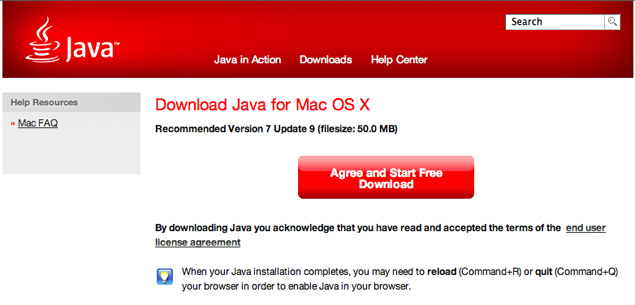
Once again a zero day vulnerability exploit is sold by cyber criminals in the underground, once again a the flaw is related to Oracle’s Java software that could allow to gain remote control over victim's machine. The news has been reported by KrebsOnSecurity blog that announced that the exploit being sold on an Underweb forum. The vulnerability is related to the most recent version of Java JRE 7 Update 9, it isn't present in previous versions of the framework, in particular the bug resides within the Java class “MidiDevice according the info provided by the seller that describes it with following statements: “ Code execution is very reliable, worked on all 7 version I tested with Firefox and MSIE on Windows 7 ,” “ I will only sell this ONE TIME and I leave no guarantee that it will not be patched so use it quickly. ” The exploited class is a component of Java that handles audio input and output. It's easy to understand that similar vulnerability has a great value du...
Apple update removes Java plugin from OS X browsers

Apple update removes Java plugin from OS X browsers

Oct 19, 2012
Apple has discontinued its own Java plugin, issuing an 'update' that removes it from MacOS and encourages users to instead download Oracle's version of the software. Its another step by Apple towards making OS X safer on the web. Mac users may have noticed that Java-based websites are displaying a " Missing Plug-in " notification. The Apple Support page states that this update is for OS X 10.7 and later. Apart from stripping browsers of the Java plug-in, it also removes the Java Preferences application, since it is no longer required for applet setting configuration. Just to be clear, the update does not remove Java from your system if its installed, just the Java plugin from your web browsers. In August, Java was blasted as an unsafe plug-in that should only be used when absolutely necessary after a zero-day exploit was discovered, rolled into the user-friendly Blackhole exploit kit and used for nearly a week before Oracle issued a patch. That patch, however,...
cyber security

AI Security Board Report Template

websiteWizAI Security / Compliance
This template helps security and technology leaders clearly communicate AI risk, impact, and priorities in language boards understand.
cyber security

Can AI Be Secure? Find Out at SANS 2026

websiteSANSCybersecurity Training
SANS Fellow, Mark Baggett explores threats, defense, & where AI security is heading.
Firefox Java update ready to stop BEAST attacks

Firefox Java update ready to stop BEAST attacks

Sep 29, 2011
Firefox Java update ready to stop BEAST attacks Firefox developers searching for a way to protect users against a new attack that decrypts sensitive web traffic are seriously considering an update that stops the open-source browser from working with Oracle's Java software framework. Johnath, the alias for Firefox Director of Engineering Johnathan Nightingale, weighed in: “ Yeah - this is a hard call. Killing Java means disabling user functionality like facebook video chat, as well as various java-based corporate apps (I feel like Citrix uses Java, for instance?) ” He went on to say that Firefox already has a mechanism for “ soft-blocking ” Java that allows users to re-enable the plugin from the browser's addons manager or in response to a dialogue box that appears in certain cases. “ Click to play or domain-specific whitelisting will provide some measure of benefit, but I suspect that enough users will whitelist, e.g., facebook that even with those mechanisms (which don...
Another Java zero-day vulnerability being exploited in the wild

Another Java zero-day vulnerability being exploited in the wild

Mar 02, 2013
Do you still have Java installed? There is a bad news for you ! FireEye has detected yet another Java zero-day vulnerability being exploited in attacks in the wild. The vulnerability targets browsers that have the latest version of the Java plugin installed Java v1.6 Update 41 and Java v1.7 Update 15 and  FireEye warned that the   vulnerability is being exploited to install a remote-access trojan dubbed McRat , researchers from security firm. " Not like other popular Java vulnerabilities in which security manager can be disabled easily, this vulnerability leads to arbitrary memory read and write in JVM process," "After triggering the vulnerability, exploit is looking for the memory which holds JVM internal data structure like if security manager is enabled or not, and then overwrites the chunk of memory as zero. " The exploit is reportedly different from the one used to attack Facebook, Twitter, Apple, and several other companies last mont...
Two new Java zero-day vulnerabilities reported to Oracle

Two new Java zero-day vulnerabilities reported to Oracle

Feb 26, 2013
A Polish security firm ' Security Explorations' reported two new Java zero-day vulnerabilities , as “ issue 54 ” and “issue 55 ,” with proof of concept code to Oracle. Oracle's security team is currently investigating the issue, but the status flaws not yet confirmed by Oracle. Less than a week after Oracle released its latest Java critical patch update, Researcher and Security Explorations's CEO Adam Gowdiak  have found two previously unknown security issues affecting Java 7. Security experts generally advise users to disable the Java browser plugin, which was exploited in recent targeted attacks on developers at Facebook , Apple and Microsoft. Java has faced an increasing number of zero-day vulnerabilities, bugs that are exploited by criminals before those flaws are patched, or even known by the vendor. Gowdiak confirmed that these newest vulnerabilities can be combined to circumvent Java's anti-exploit sandbox technology and used to attack...
Thousands of Unpatched Openfire XMPP Servers Still Exposed to High-Severity Flaw

Thousands of Unpatched Openfire XMPP Servers Still Exposed to High-Severity Flaw

Aug 24, 2023 Cyber Attack / Vulnerability
Thousands of  Openfire XMPP servers  are unpatched against a recently disclosed high-severity flaw and are susceptible to a new exploit, according to a  new report  from VulnCheck. Tracked as  CVE-2023-32315  (CVSS score: 7.5), the vulnerability relates to a path traversal vulnerability in Openfire's administrative console that could permit an unauthenticated attacker to access otherwise restricted pages reserved for privileged users. It affects all versions of the software released since April 2015, starting with version 3.10.0. It was remediated by its developer, Ignite Realtime, earlier this May with the release of versions 4.6.8, 4.7.5, and 4.8.0. "Path traversal protections were already in place to protect against exactly this kind of attack, but didn't defend against certain non-standard URL encoding for UTF-16 characters that were not supported by the embedded web server that was in use at the time," the maintainers  said  in a detailed...
Tor Browser Zero-Day Exploit Revealed Online – Patch Now

Tor Browser Zero-Day Exploit Revealed Online – Patch Now

Sep 10, 2018
Zerodium, the infamous exploit vendor that earlier this year offered $1 million for submitting a zero-day exploit for Tor Browser , today publicly revealed a critical zero-day flaw in the anonymous browsing software that could reveal your identity to the sites you visit. In a Tweet, Zerodium shared a zero-day vulnerability that resides in the NoScript browser plugin comes pre-installed with the Mozilla Firefox bundled in the Tor software. NoScript is a free browser extension that blocks malicious JavaScript, Java, Flash and other potentially dangerous content on all web pages by default, though users can whitelist sites they trust. According to Zerodium, NoScript "Classic" versions 5.0.4 to 5.1.8.6--with 'Safest' security level enabled--included in Tor Browser 7.5.6 can be bypassed to run any JavaScript file by changing its content-type header to JSON format. In other words, a website can exploit this vulnerability to execute malicious JavaScript on victim...
⚡ THN Weekly Recap: Top Cybersecurity Threats, Tools and Tips

⚡ THN Weekly Recap: Top Cybersecurity Threats, Tools and Tips

Dec 16, 2024 Cyber Threats / Weekly Recap
This past week has been packed with unsettling developments in the world of cybersecurity. From silent but serious attacks on popular business tools to unexpected flaws lurking in everyday devices, there’s a lot that might have flown under your radar. Attackers are adapting old tricks, uncovering new ones, and targeting systems both large and small. Meanwhile, law enforcement has scored wins against some shady online marketplaces, and technology giants are racing to patch problems before they become a full-blown crisis. If you’ve been too busy to keep track, now is the perfect time to catch up on what you may have missed. ⚡ Threat of the Week Cleo Vulnerability Comes Under Active Exploitation — A critical vulnerability (CVE-2024-50623) in Cleo's file transfer software—Harmony, VLTrader, and LexiCom—has been actively exploited by cybercriminals , creating major security risks for organizations worldwide. The flaw enables attackers to execute code remotely without authorization...
⚡ Weekly Recap: VPN Exploits, Oracle's Silent Breach, ClickFix Surge and More

⚡ Weekly Recap: VPN Exploits, Oracle's Silent Breach, ClickFix Surge and More

Apr 07, 2025 Threat Intelligence / Cybersecurity
Today, every unpatched system, leaked password, and overlooked plugin is a doorway for attackers. Supply chains stretch deep into the code we trust, and malware hides not just in shady apps — but in job offers, hardware, and cloud services we rely on every day. Hackers don’t need sophisticated exploits anymore. Sometimes, your credentials and a little social engineering are enough. This week, we trace how simple oversights turn into major breaches — and the silent threats most companies still underestimate. Let’s dive in. ⚡ Threat of the Week UNC5221 Exploits New Ivanti Flaw to Drop Malware — The China-nexus cyber espionage group tracked as UNC5221 exploited a now-patched flaw in Ivanti Connect Secure, CVE-2025-22457 (CVSS score: 9.0), to deliver an in-memory dropper called TRAILBLAZE, a passive backdoor codenamed BRUSHFIRE, and the SPAWN malware suite. The vulnerability was originally patched by Ivanti on February 11, 2025, indicating that the threat actors studied the patch a...
⚡ THN Weekly Recap: Top Cybersecurity Threats, Tools and Tips [3 February]

⚡ THN Weekly Recap: Top Cybersecurity Threats, Tools and Tips [3 February]

Feb 03, 2025 Cybersecurity / Recap
This week, our news radar shows that every new tech idea comes with its own challenges. A hot AI tool is under close watch, law enforcement is shutting down online spots that help cybercriminals, and teams are busy fixing software bugs that could let attackers in. From better locks on our devices to stopping sneaky tricks online, simple steps are making a big difference.  Let’s take a closer look at how these efforts are shaping a safer digital world. ⚡ Threat of the Week DeepSeek's Popularity Invites Scrutiny — The overnight popularity of DeepSeek, an artificial intelligence (AI) platform originating from China, has led to extensive scrutiny of its models, with several analyses finding ways to jailbreak its system and produce malicious or prohibited content. While jailbreaks and prompt injections are a persistent concern in mainstream AI products, the findings also show that the model lacks enough protections to prevent potential abuse by malicious actors . The AI chatbot ha...
Critical Flaw in Apache Struts2 Lets Hackers Take Over Web Servers

Critical Flaw in Apache Struts2 Lets Hackers Take Over Web Servers

Sep 05, 2017
Security researchers have discovered a critical remote code execution vulnerability in the popular Apache Struts web application framework, allowing a remote attacker to run malicious code on the affected servers. Apache Struts is a free, open-source, Model-View-Controller (MVC) framework for developing web applications in the Java programming language, which supports REST, AJAX, and JSON. The vulnerability (CVE-2017-9805) is a programming blunder that resides in the way Struts processes data from an untrusted source. Specifically, Struts REST plugin fails to handle XML payloads while deserializing them properly. All versions of Apache Struts since 2008 (Struts 2.1.2 - Struts 2.3.33, Struts 2.5 - Struts 2.5.12) are affected, leaving all web applications using the framework’s REST plugin vulnerable to remote attackers. According to one of the security researchers at LGTM, who discovered this flaw, the Struts framework is being used by "an incredibly large number and va...
⚡ THN Weekly Recap: From $1.5B Crypto Heist to AI Misuse & Apple’s Data Dilemma

⚡ THN Weekly Recap: From $1.5B Crypto Heist to AI Misuse & Apple’s Data Dilemma

Feb 24, 2025
Welcome to your weekly roundup of cyber news, where every headline gives you a peek into the world of online battles. This week, we look at a huge crypto theft, reveal some sneaky AI scam tricks, and discuss big changes in data protection. Let these stories spark your interest and help you understand the changing threats in our digital world. ⚡ Threat of the Week Lazarus Group Linked to Record-Setting $1.5 Billion Crypto Theft — The North Korean Lazarus Group has been linked to a "sophisticated" attack that led to the theft of over $1.5 billion worth of cryptocurrency from one of Bybit's cold wallets, making it the largest ever single crypto heist in history. Bybit said it detected unauthorized activity within one of our Ethereum (ETH) Cold Wallets during a planned routine transfer process on February 21, 2025, at around 12:30 p.m. UTC. The incident makes it the biggest-ever cryptocurrency heist reported to date, dwarfing that of Ronin Network ($624 million), Poly N...
⚡ THN Weekly Recap: Google Secrets Stolen, Windows Hack, New Crypto Scams and More

⚡ THN Weekly Recap: Google Secrets Stolen, Windows Hack, New Crypto Scams and More

Feb 17, 2025 Cyber Threats / Cybersecurity
Welcome to this week’s Cybersecurity News Recap. Discover how cyber attackers are using clever tricks like fake codes and sneaky emails to gain access to sensitive data. We cover everything from device code phishing to cloud exploits, breaking down the technical details into simple, easy-to-follow insights. ⚡ Threat of the Week Russian Threat Actors Leverage Device Code Phishing to Hack Microsoft Accounts — Microsoft and Volexity have revealed that threat actors with ties to Russia are leveraging a technique known as device code phishing to gain unauthorized access to victim accounts, and use that access to get hold of sensitive data and enable persistent access to the victim environment. At least three different Russia-linked clusters have been identified abusing the technique to date. The attacks entail sending phishing emails that masquerade as Microsoft Teams meeting invitations, which, when clicked, urge the message recipients to authenticate using a threat actor-generated dev...
WebSploit Toolkit 1.6 Released

WebSploit Toolkit 1.6 Released

Apr 28, 2012
WebSploit Is An Open Source Project For Scan And Analysis Remote System From Vulnerability Description : [+]Autopwn - Used From Metasploit For Scan and Exploit Target Service [+]wmap - Scan,Crawler Target Used From Metasploit wmap plugin [+]format infector - inject reverse & bind payload into file format [+]phpmyadmin - Search Target phpmyadmin login page [+]lfi - Scan,Bypass local file inclusion Vulnerability & can be bypass some WAF [+]apache users - search server username directory (if use from apache webserver) [+]Dir Bruter - brute target directory with wordlist [+]admin finder - search admin & login page of target [+]MLITM Attack - Man Left In The Middle, XSS Phishing Attacks [+]MITM - Man In The Middle Attack [+]Java Applet Attack - Java Signed Applet Attack [+]MFOD Attack Vector - Middle Finger Of Doom Attack Vector [+]USB Infection Attack - Create Executable Backdoor For Infect USB For Windows Download WebSploit Toolkit V.1.6
Expert Insights Articles Videos
Cybersecurity Resources