#1 Trusted Cybersecurity News Platform
Followed by 5.20+ million
The Hacker News Logo
Subscribe – Get Latest News

The Hacker News | #1 Trusted Source for Cybersecurity News — Index Page

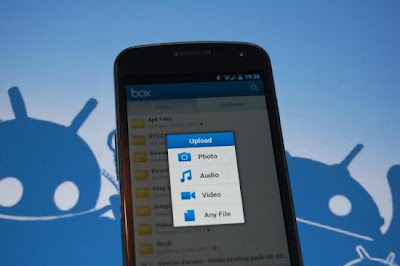
Smartphones cache poses huge risk for Cloud Storage Security

Smartphones cache poses huge risk for Cloud Storage Security

Mar 27, 2013
A couple of years ago, the tech world was abuzz about the cloud. Cloud computing refers to computing where the processing or storage takes place on a networked series of computers rather than on the device that you're using. Whether you're using a PC, laptop, tablet, smartphone, television, or video game console, everything now connected to Cloud Storage and always in sync. But there is a limitation, that smartphones can essentially remember deleted information, which poses a huge risk to organizations that issue smartphones to employees and to organizations that don't explicitly disable the use of personal devices for work-related computing. Researchers at the University of Glasgow found that cloud storage apps that say they send files to the cloud also leave retrievable versions of files on the devices. They  tested some cloud-based file storage systems tested included Box, Dropbox and SugarSync on HTC Desire, running Android 2.1, and an iPhone 3S running iOS 3. They...
Java enabled browsers are highly vulnerable

Java enabled browsers are highly vulnerable

Mar 27, 2013
Oracle has released emergency patches multiple of times in recent months for Java for one after another set of vulnerabilities . About 100 million computers reported to be vulnerable to unauthorized access via different flaw in Java software. Department of Homeland Security's US-CERT already warned users to disable Java permanently to stop hackers from taking control of users' machines. Security experts advised,'T he best defense we have right now for these kinds of attacks is to disable Java in the browser forever' . According to Websense experts, Most browser installations use outdated versions of the Java plug-in that are vulnerable to at least one of several exploits used in popular web attack toolkit. Exploit kits are a very common tool for distribution of many Java-based threats. To detect the vulnerable Java versions that are installed on systems and Websense experts, used their technology via ' threat intelligence network' , which monitors bi...
Canonical to create UbuntuKylin OS for Chinese users

Canonical to create UbuntuKylin OS for Chinese users

Mar 23, 2013
Canonical, the software company that manages and funds Ubuntu, announced to develop a new, open-source operating system customized especially for Chinese users called ' UbuntuKylin OS '. According to the BBC, Chinese government and Canonical partner to launch its home grown operating system. China signaled its intention to move away from its dependence on western software products i.e windows. Canonical staff and Chinese researchers will be working on the OS at a Beijing lab. China's Ministry of Industry and Information Technology will collaborate with Canonical to come up with Kylin to run on servers, aimed at websites, online shops, and hosting. The first version of Ubuntu Kylin is for the laptops and desktops. Therefore the Android dominates the Chinese market for a few more years. The Ubuntu Kylin is not for the mobile device because Canonical already has the Ubuntu Mobile OS. Future releases will also include integration with Baidu maps and shoppi...
cyber security

2025 Cloud Security Risk Report

websiteSentinelOneCloud Security / Artificial Intelligence
Learn 5 key risks to cloud security such as cloud credential theft, lateral movements, AI services, and more.
cyber security

Most AI Risk Isn't in Models, It's in Your SaaS Stack

websiteRecoAI Security / (SaaS Security
Your models aren't the problem. The sprawl of your SaaS apps, AI and agents are. Here's where to start.
Apple adds two-factor authentication to iCloud and Apple ID

Apple adds two-factor authentication to iCloud and Apple ID

Mar 22, 2013
Apple is beefing up the security of its iCloud and Apple ID accounts by adding two-factor authentication to the account login process. Users who activate the option will be required to enter a four-digit code they may receive via SMS message, aside from the usual password. Two-factor authentication is gaining popularity because it makes login to online services significantly more secure compared to regular process. Apple has rolled out this functionality for Apple ID and iCloud users. " Turning on two-step verification reduces the possibility of someone accessing or making unauthorized changes to your account information at My Apple ID or making purchases using your account ," Apple said . Apple will be using both the app and SMS versions, providing security codes through texts as well as the FindMyiPhone app. As long as users are able to remember their password, they will have the ability to generate a new recovery key from the My Apple ID web...
T-Mobile Wi-Fi Calling App vulnerable to Man-in-the-Middle attack

T-Mobile Wi-Fi Calling App vulnerable to Man-in-the-Middle attack

Mar 22, 2013
T-Mobile devices having a default Wi-Fi Calling feature that keeps you connected in areas with little or no coverage using Wi-Fi connection. But according to new finding by students Jethro Beekman and Christopher Thompson from University of California Berkeley, that this feature lets millions of Android users vulnerable to Man-in-the-Middle attack . The simplest way to become a man-in-the-middle would be for the attacker to be on the same open wireless network as the victim, such as at a coffee shop or other public space. In a technical analysis of the exploit, The flaw could potentially allow hackers to access and modify calls and messages made by T-Mobile users on certain Android smartphones. Beekman and Thompson informed T-Mobile, a division of Deutsche Telekom, of the flaw in December and on March 18 T-Mobile was able to resolve the issue for all affected phone models. T-Mobile uses regular VoIP for Wi-Fi Calling instead of a connection that encry...
South Korea Cyber Attack, Wiper malware and Chinese IP Address

South Korea Cyber Attack, Wiper malware and Chinese IP Address

Mar 21, 2013
Yesterday we reported about a massive Cyber attack on South Korea that was responsible for shutting down networks of South Korean banks and TV broadcasters. Police are still investigating the cyber attack  but the country's Communications Commission has revealed that the hacking originated from a Chinese IP address. Symantec Security team analyze the code used in the cyber attacks against South Korea and they discovered an additional component used in this attack that is capable of wiping Linux machines.  The malware, which it called Jokra, contains a module for wiping remote Linux machines. ' The included module checks Windows 7 and Windows XP computers for an application called mRemote, an open source, multi-protocol remote connections manager. ' Symantec said. McAfee also published an analysis of the attack code, which wrote over a computer's master boot record, which is the first sector of the computer's hard drive that the computer checks before ...
Feds do not need court warrants to Track your Car with GPS device

Feds do not need court warrants to Track your Car with GPS device

Mar 20, 2013
The US government is claiming that authorities do not need court warrants to affix GPS devices to vehicles to monitor their every move. t's been more than a year since a Supreme Court decision established that affixing a GPS tracking device to a vehicle constitutes a search under the constitution. The decision, United States vs. Jones , throws out the drug-related conviction of nightclub owner Antoine Jones. The GPS locator was installed the day after the warrant expired and while the vehicle was outside of the department's jurisdiction, and DC police tracked Jones for nearly a month after installation before arresting him. " Requiring a warrant and probable cause before officers may attach a GPS device to a vehicle, which is inherently mobile and may no longer be at the location observed when the warrant is obtained, would seriously impede the government's ability to investigate drug trafficking, terrorism, and other crimes. Law enforcement officers co...
New Mac OS X adware Trojan spreading via browser plugin

New Mac OS X adware Trojan spreading via browser plugin

Mar 20, 2013
Russian anti-virus company Doctor Web reports that a new Mac OS X adware Trojan spreading itself via crafted movie trailer pages that prompt users to install a browser plugin. Basically, an adware is any software package which automatically renders advertisements in order to generate revenue for its author. Dubbed as ' Trojan.Yontoo.1 ', Attackers have provided a number of alternative ways to spread the threat. The Trojan can also be downloaded as a media player, a video quality enhancement program or a download accelerator. When victim visits the site, the dialogue only imitates the traditional plate and specially designed by hackers to enter a potential victim of misleading. After pressing the « Install the plug-in » victim is redirected to the site to download malware. When launched, Trojan.Yontoo.1 displays a dialogue window that asks the user if they want to install Free Twit Tube. after the user presses ' Continue ', instead of the promis...
Massive cyber attack on South Korean banks and TV broadcasters

Massive cyber attack on South Korean banks and TV broadcasters

Mar 20, 2013
Computer networks at major South Korean banks and top TV broadcasters crashed simultaneously Wednesday, during a Massive cyber attack. South Korean police investigating reports from several major broadcasters and banks. least three broadcasters KBS, MBC and YTN and the Shinhan and Nonghyu banks reported that their computer networks had been crached. The state-run Korea Information Security Agency said that Screens went blank at 2 p.m. and more than seven hours later some systems were still down.  The take down was apparently not from a distributed denial-of-service (DDOS) attack, but a virus that has apparently infected machines in these organizations and delivered its payload simultaneously. An official at the Korea Communications Commission said investigators speculate that malicious code was spread from company servers that send automatic updates of security software and virus patches. The Associated Press says: " The latest network para...
HDFC Bank website vulnerable to ID Theft and Account Blockade

HDFC Bank website vulnerable to ID Theft and Account Blockade

Mar 20, 2013
Indian Security Researcher Jiten Jain from Xebia Architects today revealed that one of the Largest Private Banks in India, HDFC Bank's e-Banking website could be easy target of Unique type of Denial of Service Attack which could result in blocking of e-banking accounts of all its customers. Here is the detailed report of vulnerability submitted by him. ___________________________________________ The NetBanking service of HDFC Bank, Which is one of the largest and most reputed Banks in India, is completely vulnerable to ID theft, Targeted phishing and Mass Account Blockade. HDFC bank has implemented an extra security solution called 'Secure Access' on its website but instead it has given a hidden door to hackers to block all HDFC NetBanking accounts. 'Secure Access' is an additional layer of security implement on HDFC Bank website is essentially a solution protecting your account from hackers and fraudsters. Secure Access, an online security initiati...
AT&T Hacker Andrew Auernheimer sentenced to 3.5 Years in prison

AT&T Hacker Andrew Auernheimer sentenced to 3.5 Years in prison

Mar 18, 2013
Self-described troll and Grey hat AT&T Hacker Andrew "Weev" Auernheimer, 26, has been sentenced to 41 months in prison for exploiting an AT&T security hole three years ago, and releasing thousands of iPad owners email addresses. According to authorities, they obtained the ICC-ID and e-mail address for about 120,000 iPad users. Each charge carried with it a potential prison terms of five years. He will serve 41 months in a federal prison, with concurrent probation for three years. He also owes restitution to the U.S. Treasury to be dispersed to AT&T in the amount of $73,000. In 2010, Auernheimer and Daniel Spitler, discovered that visiting an unsecured AT&T Web server and entering a number associated with the customer's wireless account allowed him to obtain that customer's email address. Computer security researcher Charlie Miller tweeted " We could all go to jail for security research at any moment, and a jury would happily convi...
Expert Insights Articles Videos
Cybersecurity Resources