-->
#1 Trusted Cybersecurity News Platform
Followed by 5.70+ million
The Hacker News Logo
Get the Latest News
cybersecurity

Search results for source code scanner tools | Breaking Cybersecurity News | The Hacker News

Why Data Security and Privacy Need to Start in Code

Why Data Security and Privacy Need to Start in Code

Dec 16, 2025 AI Governance / Application Security
AI-assisted coding and AI app generation platforms have created an unprecedented surge in software development. Companies are now facing rapid growth in both the number of applications and the pace of change within those applications. Security and privacy teams are under significant pressure as the surface area they must cover is expanding quickly while their staffing levels remain largely unchanged. Existing data security and privacy solutions are too reactive for this new era. Many begin with data already collected in production, which is often too late. These solutions frequently miss hidden data flows to third party and AI integrations, and for the data sinks they do cover, they help detect risks but do not prevent them. The question is whether many of these issues can instead be prevented early. The answer is yes. Prevention is possible by embedding detection and governance controls directly into development. HoundDog.ai provides a privacy code scanner built for exactly this p...
Claude Code Security and Magecart: Getting the Threat Model Right

Claude Code Security and Magecart: Getting the Threat Model Right

Mar 18, 2026 Supply Chain Attack / Web Security
When a Magecart payload hides inside the EXIF data of a dynamically loaded third-party favicon, no repository scanner will catch it – because the malicious code never actually touches your repo. As teams adopt Claude Code Security for static analysis, this is the exact technical boundary where AI code scanning stops and client-side runtime execution begins. A detailed analysis of where Claude Code Security stops — and what runtime monitoring covers — is available here . A Magecart skimmer recently found in the wild used a three-stage loader chain to hide its payload inside a favicon's EXIF metadata — never touching the merchant's source code, never appearing in a repository, and executing entirely in the shopper's browser at checkout. The attack raises a question that’s worth getting precise about: which category of tool is actually supposed to catch this? Magecart Lives Outside Your Codebase Magecart‑style attacks are rarely about classic vulnerabilities in your own ...
What to Look for When Selecting a Static Application Security Testing (SAST) Solution

What to Look for When Selecting a Static Application Security Testing (SAST) Solution

May 24, 2023 AppSec / DevSecOps
If you're involved in securing the applications your organization develops, there is no question that Static Application Security Testing (SAST) solutions are an important part of a comprehensive application security strategy. SAST secures software, supports business more securely, cuts down on costs, reduces risk, and speeds time to development, delivery, and deployment of mission-critical applications.  SAST scans code early during development, so your AppSec team won't be scrambling to fix unexpected vulnerabilities right before that big launch is planned. You'll avoid surprises and launch delays without inadvertently releasing risky software to customers — or into production.  But if you consider SAST as a part of a larger AppSec platform, crucial for those who wish to  shift security everywhere  possible in the software development life cycle (SDLC), some SAST solutions outshine others.  Knowing what to focus on With a plethora of players in the market...
cyber security

Stephen Sims Wrote SEC660 (GXPN). He's Also the SANS NetSec 2026 Keynote Speaker

websiteSANS InstituteNetwork Security / Ethical Hacking
Train with the author of advanced exploit writing—then hear him open the conference. Register now.
cyber security

Inside Device Code Phishing: Live Demos, Real Kits, and What's Next

websitePush SecurityPhishing / Webinar
Device code attacks are up 37x this year, with 18+ kits in the wild. Join the research webinar on June 30th.
Why Secrets in JavaScript Bundles are Still Being Missed

Why Secrets in JavaScript Bundles are Still Being Missed

Jan 20, 2026 API Security / Vulnerability
Leaked API keys are no longer unusual, nor are the breaches that follow. So why are sensitive tokens still being so easily exposed? To find out, Intruder’s research team looked at what traditional vulnerability scanners actually cover and built a new secrets detection method to address gaps in existing approaches.  Applying this at scale by scanning 5 million applications revealed over 42,000 exposed tokens across 334 secret types, exposing a major class of leaked secrets that is not being handled well by existing tooling, particularly in single-page applications (SPAs). In this article, we break down existing secrets detection methods and reveal what we found when we scanned millions of applications for secrets hidden in JavaScript bundles. Established secrets detection methods (and their limitations) Traditional secrets detection The traditional, fully automated approach to detecting application secrets is to search a set of known paths and apply regular expressions to ma...
⚡ Weekly Recap: Axios Hack, Chrome 0-Day, Fortinet Exploits, Paragon Spyware and More

⚡ Weekly Recap: Axios Hack, Chrome 0-Day, Fortinet Exploits, Paragon Spyware and More

Apr 06, 2026 Cybersecurity / Hacking
This week had real hits. The key software got tampered with. Active bugs showed up in the tools people use every day. Some attacks didn’t even need much effort because the path was already there. One weak spot now spreads wider than before. What starts small can reach a lot of systems fast. New bugs, faster use, less time to react. That’s this week. Read through it. ⚡ Threat of the Week Axios npm Package Compromised by N. Korean Hackers —Threat actors with ties to North Korea seized control of the npm account belonging to the lead maintainer of Axios, a popular npm package with nearly 100 million weekly downloads, to push malicious versions containing a cross-platform malware dubbed WAVESHAPER.V2. The activity has been attributed to a financially motivated threat actor known as UNC1069. The incident demonstrates how quickly the compromise of a popular npm package can have ripple effects through the ecosystem. T...
Over 1,000 Exposed ComfyUI Instances Targeted in Cryptomining Botnet Campaign

Over 1,000 Exposed ComfyUI Instances Targeted in Cryptomining Botnet Campaign

Apr 07, 2026 Cloud Security / Malware
An active campaign has been observed targeting internet-exposed instances running ComfyUI, a popular stable diffusion platform, to enlist them into a cryptocurrency mining and proxy botnet. "A purpose-built Python scanner continuously sweeps major cloud IP ranges for vulnerable targets, automatically installing malicious nodes via ComfyUI-Manager if no exploitable node is already present," Censys security researcher Mark Ellzey said in a report published Monday. The attack activity, at its core, systemically scans for exposed ComfyUI instances and exploits a misconfiguration that allows remote code execution on unauthenticated deployments through custom nodes . Upon successful exploitation, the compromised hosts are added to a cryptomining operation that mines Monero via XMRig and Conflux via lolMiner, as well as to a Hysteria V2 botnet. Both of them are centrally managed through a Flask-based command-and-control (C2) dashboard. Data from the at...
Five Core Tenets Of Highly Effective DevSecOps Practices

Five Core Tenets Of Highly Effective DevSecOps Practices

May 21, 2024 DevSecOps / Artificial Intelligence
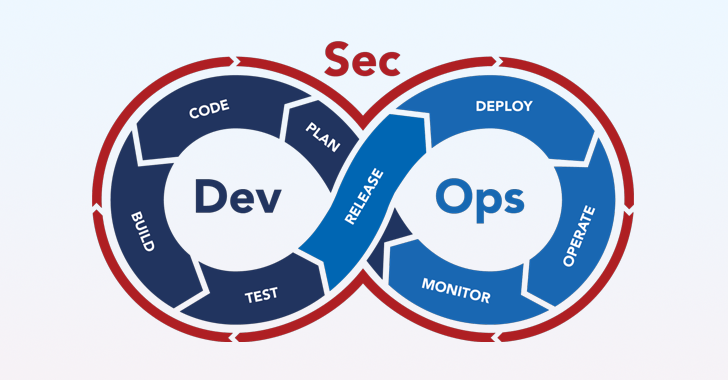
One of the enduring challenges of building modern applications is to make them more secure without disrupting high-velocity DevOps processes or degrading the developer experience. Today’s cyber threat landscape is rife with sophisticated attacks aimed at all different parts of the software supply chain and the urgency for software-producing organizations to adopt DevSecOps practices that deeply integrate security throughout the software development life cycle has never been greater.  However, HOW organizations go about it is of critical importance. For example, locking down the development platform, instituting exhaustive code reviews, and enforcing heavyweight approval processes may improve the security posture of pipelines and code, but don’t count on applications teams to operate fluidly enough to innovate. The same goes for application security testing; uncovering a mountain of vulnerabilities does little good if developers have inadequate time or guidance to fix them. At a ...
Picklescan Bugs Allow Malicious PyTorch Models to Evade Scans and Execute Code

Picklescan Bugs Allow Malicious PyTorch Models to Evade Scans and Execute Code

Dec 03, 2025 Machine Learning / Vulnerability
Three critical security flaws have been disclosed in an open-source utility called Picklescan that could allow malicious actors to execute arbitrary code by loading untrusted PyTorch models, effectively bypassing the tool's protections. Picklescan , developed and maintained by Matthieu Maitre (@mmaitre314), is a security scanner that's designed to parse Python pickle files and detect suspicious imports or function calls, before they are executed. Pickle is a widely used serialization format in machine learning, including PyTorch , which uses the format to save and load models. But pickle files can also be a huge security risk , as they can be used to automatically trigger the execution of arbitrary Python code when they are loaded. This necessitates that users and organizations load trusted models, or load model weights from TensorFlow and Flax. The issues discovered by JFrog essentially make it possible to bypass the scanner, present the scanned model files as safe, and e...
Chinese DeepSeek-R1 AI Generates Insecure Code When Prompts Mention Tibet or Uyghurs

Chinese DeepSeek-R1 AI Generates Insecure Code When Prompts Mention Tibet or Uyghurs

Nov 24, 2025 Artificial Intelligence / Web Security
New research from CrowdStrike has revealed that DeepSeek's artificial intelligence (AI) reasoning model DeepSeek-R1 produces more security vulnerabilities in response to prompts that contain topics deemed politically sensitive by China. "We found that when DeepSeek-R1 receives prompts containing topics the Chinese Communist Party (CCP) likely considers politically sensitive, the likelihood of it producing code with severe security vulnerabilities increases by up to 50%," the cybersecurity company said . The Chinese AI company previously attracted national security concerns, leading to a ban in many countries. Its open-source DeepSeek-R1 model was also found to censor topics considered sensitive by the Chinese government, refusing to answer questions about the Great Firewall of China or the political status of Taiwan, among others. In a statement released earlier this month, Taiwan's National Security Bureau warned citizens to be vigilant when using Chinese-m...
New Condi Malware Hijacking TP-Link Wi-Fi Routers for DDoS Botnet Attacks

New Condi Malware Hijacking TP-Link Wi-Fi Routers for DDoS Botnet Attacks

Jun 21, 2023 Network Security / Botnet
A new malware called  Condi  has been observed exploiting a security vulnerability in TP-Link Archer AX21 (AX1800) Wi-Fi routers to rope the devices into a distributed denial-of-service (DDoS) botnet. Fortinet FortiGuard Labs  said  the campaign has ramped up since the end of May 2023. Condi is the work of a threat actor who goes by the online alias zxcr9999 on Telegram and runs a Telegram channel called Condi Network to advertise their warez. "The Telegram channel was started in May 2022, and the threat actor has been monetizing its botnet by providing DDoS-as-a-service and selling the malware source code," security researchers Joie Salvio and Roy Tay said. An analysis of the malware artifact reveals its ability to terminate other competing botnets on the same host. It, however, lacks a persistence mechanism, meaning the program cannot survive a system reboot. To get around this limitation, the malware deletes multiple binaries that are used to shut down or re...
4 Best Free Online Security Tools for SMEs in 2020

4 Best Free Online Security Tools for SMEs in 2020

Nov 14, 2019
Cyberattacks on small and midsized companies in 2019 cost $200,000 per company on average, mercilessly putting many of them out of business, says CNBC in its analysis of a recent Accenture report. In light of the global cybersecurity skills shortage, the number is set to soar in 2020. Solely in the UK, over 50,000 British SMEs could collapse next year following a cyberattack. This article brings a list of free tools that are already being used to combat these alarming challenges and enabling SMEs to arm themselves against a wide range of cyber offenders. Website Security Test with GDPR and PCI DSS Compliance Scan The problem: It would be hard to come across an SME without a website, or at least a web page on the Internet. Such websites are habitually poorly protected, becoming low-hanging fruit for cybercriminals. Even if the website does not store or handle any payment transactions or otherwise sensitive information, once breached, access to it can be sold in Dark Web mark...
The Truth About False Positives in Security

The Truth About False Positives in Security

Aug 09, 2022
TL;DR: As weird as it might sound, seeing a few false positives reported by a security scanner is probably a good sign and certainly better than seeing none. Let's explain why. Introduction False positives have made a somewhat unexpected appearance in our lives in recent years. I am, of course, referring to the COVID-19 pandemic, which required massive testing campaigns in order to control the spread of the virus. For the record, a false positive is a result that appears positive (for COVID-19 in our case), where it is actually negative (the person is not infected). More commonly, we speak of false alarms. In computer security, we are also often confronted with false positives. Ask the security team behind any SIEM what their biggest operational challenge is, and chances are that false positives will be mentioned. A recent  report  estimates that as much as 20% of all the alerts received by security professionals are false positives, making it a big source of fatigue. Yet...
Expert Insights Articles Videos
Cybersecurity Resources