-->
#1 Trusted Cybersecurity News Platform
Followed by 5.40+ million
The Hacker News Logo
Subscribe – Get Latest News
Security Service Edge

Search results for exposure!” | Breaking Cybersecurity News | The Hacker News

Navigating the Threat Landscape: Understanding Exposure Management, Pentesting, Red Teaming and RBVM

Navigating the Threat Landscape: Understanding Exposure Management, Pentesting, Red Teaming and RBVM

Apr 29, 2024 Exposure Management / Attack Surface
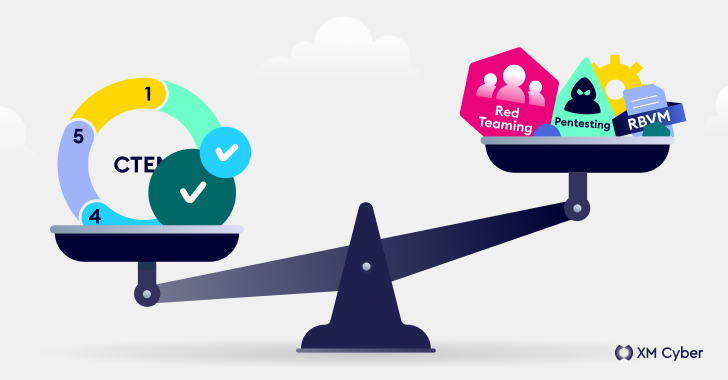
It comes as no surprise that today's cyber threats are orders of magnitude more complex than those of the past. And the ever-evolving tactics that attackers use demand the adoption of better, more holistic and consolidated ways to meet this non-stop challenge. Security teams constantly look for ways to reduce risk while improving security posture, but many approaches offer piecemeal solutions – zeroing in on one particular element of the evolving threat landscape challenge – missing the forest for the trees.  In the last few years, Exposure Management has become known as a comprehensive way of reigning in the chaos, giving organizations a true fighting chance to reduce risk and improve posture. In this article I’ll cover what Exposure Management is, how it stacks up against some alternative approaches and why building an Exposure Management program should be on  your 2024 to-do list. What is Exposure Mana...
A Sherlock Holmes Approach to Cybersecurity: Eliminate the Impossible with Exposure Validation

A Sherlock Holmes Approach to Cybersecurity: Eliminate the Impossible with Exposure Validation

Oct 29, 2024 Vulnerability / Threat Intelligence
Sherlock Holmes is famous for his incredible ability to sort through mounds of information; he removes the irrelevant and exposes the hidden truth. His philosophy is plain yet brilliant: “When you have eliminated the impossible, whatever remains, however improbable, must be the truth.” Rather than following every lead, Holmes focuses on the details that are needed to move him to the solution. In cybersecurity, exposure validation mirrors Holmes’ approach: Security teams are usually presented with an overwhelming list of vulnerabilities, yet not every vulnerability presents a real threat. Just as Holmes discards irrelevant clues, security teams must eliminate exposures that are unlikely to be exploited or do not pose significant risks. Exposure validation (sometimes called Adversarial Exposure Validation) enables teams to concentrate on the most significant issues and minimize distractions. Similar to Holmes' deductive reasoning, validation of exposures directs organizations towa...
Focus on What Matters Most: Exposure Management and Your Attack Surface

Focus on What Matters Most: Exposure Management and Your Attack Surface

Aug 23, 2024 Attack Surface Management
Read the full article for key points from Intruder’s VP of Product, Andy Hornegold’s recent talk on exposure management. If you’d like to hear Andy’s insights first-hand,  watch Intruder’s on-demand webinar . To learn more about reducing your attack surface , reach out to their team today.   Attack surface management vs exposure management Attack surface management (ASM) is the ongoing process of discovering and identifying assets that can be seen by an attacker on the internet, showing where security gaps exist, where they can be used to perform an attack, and where defenses are strong enough to repel an attack. If there's something on the internet that can be exploited by an attacker, it typically falls under the realm of attack surface management. Exposure management takes this a step further to include data assets, user identities, and cloud account configuration. It can be summarized as the set of processes that allow organizations to continually and consistently eval...
cyber security

Secure Coding Best Practices [Cheat Sheet]

websiteWizSecure Coding / DevSecOps
Secure coding starts long before production. Reduce risk early with practical secure coding and design best practices.
cyber security

Inside the 2026 Cyber Workforce: Skills, Shortages, and Shifts in the Age of AI

websiteSANS InstituteAI Security / Cybersecurity
Insights to help leaders make informed decisions and show practitioners where careers are heading.
The Evolution of SOC Operations: How Continuous Exposure Management Transforms Security Operations

The Evolution of SOC Operations: How Continuous Exposure Management Transforms Security Operations

Nov 03, 2025 SOC Operations / Exposure Management
Security Operations Centers (SOC) today are overwhelmed. Analysts handle thousands of alerts every day, spending much time chasing false positives and adjusting detection rules reactively. SOCs often lack the environmental context and relevant threat intelligence needed to quickly verify which alerts are truly malicious. As a result, analysts spend excessive time manually triaging alerts, the majority of which are classified as benign. Addressing the root cause of these blind spots and alert fatigue isn’t as simple as implementing more accurate tools. Many of these traditional tools are very accurate, but their fatal flaw is a lack of context and a narrow focus - missing the forest for the trees. Meanwhile, sophisticated attackers exploit exposures invisible to traditional reactive tools, often evading detection using widely-available bypass kits .  While all of these tools are effective in their own right, they often fail because of the reality that attackers don’t employ just ...
Exposure Assessment Platforms Signal a Shift in Focus

Exposure Assessment Platforms Signal a Shift in Focus

Jan 21, 2026 Vulnerability Management / Threat Modeling
Gartner® doesn’t create new categories lightly. Generally speaking, a new acronym only emerges when the industry's collective "to-do list" has become mathematically impossible to complete. And so it seems that the introduction of the Exposure Assessment Platforms (EAP) category is a formal admission that traditional Vulnerability Management (VM) is no longer a viable way to secure a modern enterprise. The shift from the traditional Market Guide for Vulnerability Assessment to the new Magic Quadrant for EAPs represents a move away from the "vulnerability hose", i.e., the endless stream of CVEs, and toward a model of Continuous Threat Exposure Management (CTEM) . To us, this is more than just a change in terminology; it is an attempt to solve the "Dead End" paradox that has plagued security teams for a decade. In the inaugural Magic Quadrant report of this category, Gartner evaluated 20 vendors for their ability to support continuous discovery, ris...
What is Exposure Management and How Does it Differ from ASM?

What is Exposure Management and How Does it Differ from ASM?

Mar 05, 2024 Attack Surface / Exposure Management
Startups and scales-ups are often cloud-first organizations and rarely have sprawling legacy on-prem environments. Likewise, knowing the agility and flexibility that cloud environments provide, the mid-market is predominantly running in a hybrid state, partly in the cloud but with some on-prem assets. While there has been a bit of a backswing against the pricing and lock-in presented when using cloud infrastructure, cloud is still the preferred provider for the majority of SMBs. As a result, external attack surfaces are increasingly complex and distributed and, therefore, harder to monitor and secure. This expanded attack surface gives hackers plenty of blind spots and gaps to exploit. Security teams are on the back, reacting, often too slowly, to changes in their own attack surface as engineering teams continuously spin up and expose new systems, services, and data to the internet. This is compounded by the fact that the threat landscape is always changing. Thousands of new vulne...
CTEM in the Spotlight: How Gartner's New Categories Help to Manage Exposures

CTEM in the Spotlight: How Gartner's New Categories Help to Manage Exposures

Aug 27, 2024 Threat Management / Enterprise Security
Want to know what’s the latest and greatest in SecOps for 2024? Gartner’s recently released Hype Cycle for Security Operations report takes important steps to organize and mature the domain of Continuous Threat Exposure Management, aka CTEM. Three categories within this domain are included in this year’s report: Threat Exposure Management, Exposure Assessment Platforms (EAP), and Adversarial Exposure Validation (AEV). These category definitions are aimed at providing some structure to the evolving landscape of exposure management technologies. Pentera, listed as a sample vendor in the newly defined AEV category, is playing a pivotal role in increasing the adoption of CTEM, with a focus on security validation. Following is our take on the CTEM related product categories and what they mean for enterprise security leaders. The Industry is Maturing CTEM, coined by Gartner in 2022, presents a structural approach for continuously assessing, prioritizing, validating, and remediating expo...
Why CTEM is the Winning Bet for CISOs in 2025

Why CTEM is the Winning Bet for CISOs in 2025

May 19, 2025 Risk Management / Threat Detection
Continuous Threat Exposure Management (CTEM) has moved from concept to cornerstone, solidifying its role as a strategic enabler for CISOs. No longer a theoretical framework, CTEM now anchors today’s cybersecurity programs by continuously aligning security efforts with real-world risk. At the heart of CTEM is the integration of Adversarial Exposure Validation (AEV), an advanced, offensive methodology powered by proactive security tools including External Attack Surface Management (ASM), autonomous penetration testing and red teaming, and Breach and Attack Simulation (BAS). Together, these AEV tools transform how enterprises proactively identify, validate, and reduce risks, turning threat exposure into a manageable business metric. CTEM reflects a broader evolution in how security leaders measure effectiveness and allocate resources. As board expectations grow and cyber risk becomes inseparable from business risk, CISOs are leveraging CTEM to drive measurable, outcome-based security ...
Cybersecurity CPEs: Unraveling the What, Why & How

Cybersecurity CPEs: Unraveling the What, Why & How

Jun 10, 2024 Cybersecurity / Exposure Management
Staying Sharp: Cybersecurity CPEs Explained Perhaps even more so than in other professional domains, cybersecurity professionals constantly face new threats. To ensure you stay on top of your game, many certification programs require earning Continuing Professional Education (CPE) credits. CPEs are essentially units of measurement used to quantify the time and effort professionals spend on maintaining and enhancing skills and knowledge in the field of cybersecurity, and they act as points that demonstrate a commitment to staying current. CPEs are best understood in terms of other professions: just like medical, legal and even CPA certifications require continuing education to stay up-to-date on advancements and industry changes, cybersecurity professionals need CPEs to stay informed about the latest hacking tactics and defense strategies. CPE credits are crucial for maintaining certifications issued by various cybersecurity credentialing organizations, such as (ISC)², ISACA, and C...
CTEM's Core: Prioritization and Validation

CTEM's Core: Prioritization and Validation

Sep 25, 2025 Vulnerability Management / Penetration Testing
Despite a coordinated investment of time, effort, planning, and resources, even the most up-to-date cybersecurity systems continue to fail. Every day. Why?  It’s not because security teams can't see enough. Quite the contrary. Every security tool spits out thousands of findings. Patch this. Block that. Investigate this. It's a tsunami of red dots that not even the most crackerjack team on earth could ever clear.  And here's the other uncomfortable truth: Most of it doesn't matte r. Fixing everything is impossible. Trying to is a fool’s errand. Smart teams aren’t wasting precious time running down meaningless alerts. They understand that the hidden key to protecting their organization is knowing which exposures are actually putting the business at risk. That's why Gartner introduced the concept of Continuous Threat Exposure Management and put prioritization and validation at the heart of it. It's not about more dashboards or prettier charts. It's abou...
The ROI Problem in Attack Surface Management

The ROI Problem in Attack Surface Management

Jan 02, 2026 Cloud Security / Security Operations
Attack Surface Management (ASM) tools promise reduced risk. What they usually deliver is more information.  Security teams deploy ASM, asset inventories grow, alerts start flowing, and dashboards fill up. There is visible activity and measurable output. But when leadership asks a simple question, “ Is this reducing incidents? ” the answer is often unclear.  This gap between effort and outcome is the core ROI problem in attack surface management, especially when ROI is measured primarily through asset counts instead of risk reduction.  The Promise vs. The Proof Most ASM programs are built around a reasonable idea: you can’t protect what you don’t know exists. As a result, teams focus on discovery: domains and subdomains, IPs and cloud resources, third-party infrastructure, and transient or short-lived assets.  Over time, counts increase. Dashboards are trending upward. Coverage improves.  But none of those metrics directly answer whether the organization i...
CTEM in Practice: Prioritization, Validation, and Outcomes That Matter

CTEM in Practice: Prioritization, Validation, and Outcomes That Matter

Jan 27, 2026 Attack Surface Management / Cyber Risk
Cybersecurity teams increasingly want to move beyond looking at threats and vulnerabilities in isolation. It’s not only about what could go wrong (vulnerabilities) or who might attack (threats), but where they intersect in your actual environment to create real, exploitable exposure. Which exposures truly matter? Can attackers exploit them? Are our defenses effective? Continuous Threat Exposure Management (CTEM) can provide a useful approach to the cybersecurity teams in their journey towards unified threat/vulnerability or exposure management. What CTEM Really Means CTEM, as defined by Gartner, emphasizes a ‘continuous’ cycle of identifying, prioritizing, and remediating exploitable exposures across your attack surface, which improves your overall security posture as an outcome. It’s not a one-off scan and a result delivered via a tool; it’s an operational model built on five steps: Scoping – assess your threats and vulnerabilities and identify what’s most important: assets, ...
Expert Insights Articles Videos
Cybersecurity Resources